Abdorrahman Boroumand Center

for Human Rights in Iran

https://www.iranrights.org
Omid, a memorial in defense of human rights in Iran
One Person’s Story

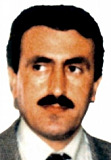
Fattah Abdoli

About

Age: 31
Nationality: Iran
Religion: Presumed Muslim (Sunni)
Civil Status: Married

Case

Date of Killing: September 17, 1992
Gravesite location is known: Yes
Location of Killing: Prager Street, Berlin, Germany
Mode of Killing: Extrajudicial Execution » Extrajudicial shooting

About this Case

In the summer of 1992, Mr. Abdoli traveled to Berlin with a Democratic Party of Iranian Kurdistan delegation to attend an international conference.

Information regarding the extrajudicial execution of Fattah Abdoli, son of Hassan Abdoli and Hajar Ahmadi, was gathered through an interview conducted by the Abdorrahman Boroumand Center (ABC) with a relative (May 22, 2021), an interview with an informed source (May 11, 2021), an interview with Hamid Nowzari, a Mykonos trial observer (January 2, 2024), and an interview with Frank Garbely, producer of the documentary Witness C (July 6, 2023). Additional information was obtained from the Mykonos trial's final verdict (December 9, 1998), the Chief Public Prosecutor of the Federal Court's indictment (May 17, 1993), the Kurdistan newspaper (the organ of the Democratic Party of Iranian Kurdistan), as published on Rahim Rashidi’s website (September 22, 2007), Murder at Mykonos: Analysis of a Political Assassination, published by the Iran Human Rights Documentation Center in July 2007; and a lecture by Bruno Jost at Humboldt University on February 15, 2026. This investigation also relied on the following publications: Hossein Mousavian’s The Challenges of Iran-West Relations: A Study of Iran-Germany Relations (Strategic Publications Center, April 2006); Salam Azizi's The Journey of No Return (Persian translation, 2021); Parviz Dastmalchi's Documents of Mykonos: September 1992 to April 1997 (1998); The Ideological Roots of Velayat-e Faqih Terrorism and the Mykonos Documents (1997), co-authored by Mehran Payandeh, Abbas Khodaqoli, and Hamid Nowzari; There Is Still a Judge in Berlin (1999); and The Criminal System — Mykonos Documents (1999), volumes 5 and 6 of The Mykonos Case File by the Iranian Opposition Committee Against Terrorism — Berlin. Other sources include the documentary Witness C, produced by R-Film, Swiss Radio and Television, and M&B Prod. (2011); The Tehran Connection: An Exclusive Look at How the Islamic Republic Hunts Down Its Opponents Abroad by Thomas Sancton in TIME magazine on March 21, 1994; and Iran's Germany Policy. Beyond 'Critical Dialogue,' a Master's thesis by Mark A. Gershoffer, Naval Postgraduate School, Monterey, California (March 1998).

Fattah Abdoli was born on April 15, 1961, in the village of Vezneh, a rural district of Naqadeh in West Azerbaijan province, into a Kurdish Sunni family. Around the age of five, his family moved to the city of Naqadeh. However, some family members continued to travel between the village and the city to manage their agricultural affairs. Mr. Abdoli attended elementary school in Naqadeh before enrolling in Kourosh Kabir Middle School. He then attended the city’s technical high school and graduated with a diploma. (ABC interview with a relative, May 22, 2021). Mr. Abdoli was married. In the spring of 1985, he married Kajal Haji Abbasi, a political activist and member of the opposition. They had one child together.

According to a close relative, Mr. Abdoli came of age during the political upheaval of the 1979 Revolution. As a result, he became politically active before entering the workforce. The interviewee noted that the ethnic diversity of Naqadeh—it is home to both Kurds and Turks—had led to government policies perceived as discriminatory. This became another factor motivating Mr. Abdoli’s political involvement. While he was still a student, he was reprimanded multiple times for engaging in political discussions in the schoolyard and for wearing traditional Kurdish outfits. As the demonstrations leading up to the revolution intensified, so too did Mr. Abdoli’s political engagement. Following the revolution, many cities across Iran, particularly in the Kurdistan and West Azerbaijan provinces, fell into a state of unrest. During this time, the Democratic Party of Iranian Kurdistan (PDKI), which had previously operated clandestinely, began openly organizing and opened an office in Naqadeh, as it did in many other cities. Soon thereafter, the party’s Youth Union began operating as well, and Mr. Abdoli and several friends registered as members. According to a close friend of Mr. Abdoli's, during the Nowruz celebration in 1979, they gathered used tires and discarded tailoring fabrics from the city and carried them to Soltan Bayeqo Mountain across from Baleqchi. There, they attempted to form the phrase "Newroz Piroz" (Happy Newroz) in Kurdish with fire, hoping the flames would be visible from downtown Naqadeh. "This act was, in fact, the beginning of our political activity," he said. (ABC interview with a relative, May 22, 2021).

In the spring of 1979, the Democratic Party held a large rally at the Naqadeh Sports Stadium to celebrate its public emergence and organizational growth. Following the rally, deadly clashes erupted in the city, reportedly incited by government forces. The ensuing violence forced many Kurdish families, including the Abdoli family, to flee Naqadeh and move to the nearby city of Piranshahr. In the fall of 1980, Mr. Abdoli was elected to the Naqadeh County Committee and was appointed to oversee the Jalb and Koyikeh districts, located between Naqadeh and Piranshahr. Later, he became head of the party’s operations in Naqadeh. In 1984, the party’s political bureau assigned him to lead its Sanandaj County branch. Following the Kurdish parties' withdrawal to border areas near Iraqi Kurdistan and the Seventh Congress, Mr. Abdoli—one of the region's most effective PDKI members—was elected an alternate Central Committee member and placed in charge of Sardasht County. Due to Sardasht’s strategic border location and the Iranian government’s incomplete control over the area, Democratic Party members could still travel there under certain conditions. This made the committee particularly significant. Mr. Abdoli was later elected a full Central Committee member during the party’s Eighth Congress. (ABC interview with a relative, May 22, 2021, and an informed source, May 11, 2021).

Following the extrajudicial execution of the party’s former leader, Dr. Abdorrahman Qasemlu, in Vienna in 1989, the party’s plenum dispatched Mr. Abdoli to Europe. He replaced Abdollah Qaderi Azar as the PDKI’s representative in Europe; Azar had also been assassinated in Vienna.

According to those close to him, Mr. Abdoli was self-made, honest, and capable. He believed in gender equality and was known as a popular, down-to-earth figure. (ABC interview with a relative, May 22, 2021; Kurdistan newspaper interview with Kajal Haji Abbasi, September 22, 2007).

His wife recalled, "He was deeply committed to education and personal development. He believed in dialogue and logical thought. He never made decisions without prior reflection. He never acted impulsively and always made decisions collectively." Mr. Abdoli enjoyed the deep trust of the party leadership. Dr. Sadeq (Sa'id) Sharafkandi, the Secretary General of the Democratic Party at the time and a later victim of the Mykonos assassination, told Mr. Abdoli’s wife before their fatal trip to Berlin: “We must do everything we can to protect Fattah. He is the party's and the people's hope. In the future, he will become someone capable of bridging serious gaps” (Kurdistan Newspaper interview with Kajal Haji Abbasi, September 22, 2007).

Mr. Abdoli faced numerous threats throughout his political life. According to a close relative, “The Islamic Republic was always pursuing him. When he was in Sardasht, there were multiple assassination attempts against him, including one by bomb" (ABC interview with a relative, May 22, 2021). 

In the summer of 1992, the Democratic Party of Iranian Kurdistan sent a delegation to Berlin to participate in an international conference. The delegation included Dr. Sadeq Sharafkandi, the party's secretary general; Fattah Abdoli, the party's representative in Europe; Homayun Ardalan, the party’s representative in Germany, joined them there. From September 14 to 17, 1992, the delegation attended the International Congress of Socialist and Social Democratic Parties, one of the world’s most prominent gatherings for socialist, social democratic, and labor parties.

The PDKI delegation hoped to engage with international actors and consult with various Iranian opposition figures in Berlin about the situation in Iran and Iranian Kurdistan and the state of the exiled opposition. 

The Kurdish Problem in the Islamic Republic

After the 1979 Islamic Revolution, the disagreements between the government of the Shiite Islamic Republic and the organizations in the Kurdish regions of western Iran regarding the rights and roles of minorities in drafting the Constitution; whether the government should be secular or religious, and especially the issue of Kurdish autonomy; and conflicts that resulted in Kurdish political organizations boycotting the April 1979 Referendum on instituting an Islamic Republic; led to serious, and at times armed, clashes between the central government and the Peshmerga (Kurdistan Democratic Party’s armed forces).

On August 19, 1979, Ayatollah Khomeini labeled the Democratic Party of Iranian Kurdistan (PDKI), the oldest and most influential Kurdish Party, “the Party of the Devil”, and declared it “unofficial and illegal”, and ordered a military attack on Kurdistan. Mass executions and intense armed clashes continued in the region for months, clashes that resulted in the deaths of a number of civilians and the displacement and relocation of the residents of certain towns. In the next four years, Kurdish parties lost their grip on power in the region to a great extent, and relocated to Iraqi Kurdistan. Since then, a number of their leaders and members have been assassinated outside Iran, especially in Iraqi Kurdistan.

In the years since the Islamic Republic has been in existence, in addition to such entities as the Democratic Party of Iranian Kurdistan, Komala (Revolutionary Organization of the Toilers of Iranian Kurdistan), the Koran School led by Ahmad Moftizadeh, Organization of Iranian Kurdistan Struggle (which was active in the early years of the Revolution), certain other Kurdish opposition parties were established outside Iran, such as the Kurdistan Free Life Party (PJAK) and the Kurdistan Freedom Party (PAK). These parties, with policies and ideologies that are not necessarily similar and uniform, have settled in parts of the Kurdistan Autonomous Region in Iraq, such as Koy, Soleimanieh, and in the foothills of Qandil mountains. Some of these parties have undergone splits in recent years. These conflicts have been more about the methods of running the organizations rather than theoretical and ideological differences. These parties have not controlled any part of the Iranian territory since the late 1980’s, and have adopted different strategies in different periods in order to confront the Islamic Republic, advance their political objectives, and recruit members.

Beginning in 2006, the conflicts between the regime and Kurdish parties – who had increased their presence in Iran in reaction to the government intensifying the detention and execution of Kurdish activists and the spread of fundamentalist beliefs in Kurdish regions – entered a new and more serious phase. Kurdish forces, especially the Democratic Party of Iranian Kurdistan and the PJAK, were attacked several times inside Iran and in Iraqi Kurdistan border regions by border patrol forces and the revolutionary Guards. That same year, Revolutionary Guards conducted armed attacks against the positions of Iranian Kurdish parties inside the borders of the Kurdish Autonomous Region in Iraq. The bombing of the Night of Yalda ceremonies (an ancient celebration of the longest night of the year) in 2006, which was also Abdorrahman Qassemlu’s birthday, resulted in the death of five Party members and 2 members of the Iraqi Kurdistan security forces. Kurdish forces also attacked Islamic Republic forces on several occasions. At least dozens were killed on each side in these military clashes.***

In subsequent years, particularly in 2017 and 2018, the clashes continued with less frequency and intensity. The most important of these clashes was the attack by PJAK forces on a border post on July 21, 2018, which resulted in 11 deaths. (Deutsche Welle, July 22, 2018; Reuters, July 21, 2018). On September 8 of that same year, the seat of the Kurdistan Democratic Party – a party that opposed armed struggle and had not participated in the clashes with the Islamic Republic forces – located in Koy in Iraqi Kurdistan, was the target of a rocket attack by the Islamic Revolutionary Guards in which 16 people were killed and 50 injured. (ISNA News Agency, September 14, 2018; Kurdistan u Kurd website (September 8, 2018).

Background on the Formation of the Kurdistan Democratic Party

The PDKI was founded in 1945 with the goal of gaining autonomy for the Kurdistan region in northwestern Iran. After the 1979 Revolution, disputes arose regarding the role of minorities in drafting the constitution, designating Shiʿa Islam as the official state religion, and, in particular, the right to autonomy in the Kurdish region. These disputes led to armed clashes between the newly established Shiʿa government in Tehran and the Kurds, who are predominantly Sunni. The conflicts culminated in military confrontations between the Revolutionary Guards and the Peshmerga, the PDKI's armed militia wing. The PDKI boycotted the March 31, 1979, referendum, which asked citizens to vote for or against establishing an Islamic Republic. On August 19, 1979, Ayatollah Khomeini called the PDKI the "Party of Satan," declared it "unofficial and illegal," and ordered a military offensive in Kurdistan. The subsequent military confrontations and mass executions lasted for several months. By 1983, the PDKI had lost much of its influence in the region. Since then, numerous party leaders have been assassinated. In 2006, the PDKI experienced an internal split, resulting in the formation of two organizations: the Democratic Party of Iranian Kurdistan (PDKI) and the Democratic Party of Kurdistan.

Sixteen years later, in August 2022, the Democratic Party of Iranian Kurdistan–Iran (HDK-I) and the Democratic Party of Iranian Kurdistan (PDKI) issued a joint statement announcing their reunification and their intention to resume activities under the unified name Democratic Party of Iranian Kurdistan, operating under a single leadership. (Kurdistan va Kurd, August 22, 2022).

Background of Extrajudicial Killings by the Islamic Republic of Iran

The Islamic Republic of Iran has a long history of politically motivated violence in Iran and around the world. Since the 1979 Revolution, Islamic Republic operatives inside and outside the country have engaged in kidnapping, disappearing, and killing a large number of individuals whose activities they deemed undesirable. The actual number of the victims of extrajudicial killings inside Iran is not clear; however, these murders began in February 1979 and have continued since then, both inside and outside Iran. The Abdorrahman Boroumand Center has so far identified over 540 killings outside Iran attributed to the Islamic Republic of Iran.

Dissidents have been assassinated by the agents of the Islamic Republic outside Iran in countries such as the Philippines, Indonesia, Japan, India, and Pakistan in Asia; Dubai, Iraq, and Turkey in the Middle East; Cyprus, France, Italy, Austria, Switzerland, Germany, Norway, Sweden, and Great Britain in Europe; and the United States across the Atlantic Ocean. In most cases, there has not been much published, and local authorities have not issued arrest warrants. But documentation, evidence, and traces obtained through investigations conducted by local police and judicial authorities confirm the theory of state committed crimes. In some instances, these investigations have resulted in the expulsion or arrest of Iranian diplomats. In a few cases outside Iran, the perpetrators of these murders have been arrested and put on trial. The evidence presented revealed the defendants’ connection to Iran’s government institutions, and an arrest warrant has been issued for Iran’s Minister of Information.

The manner in which these killings were organized and implemented in Iran and abroad is indicative of a single pattern which, according to Roland Chatelin, the Swiss prosecutor, contains common parameters and detailed planning. It can be ascertained from the similarities between these murders in different countries that the Iranian government is the principal entity that ordered the implementation of these crimes. Iranian authorities have not officially accepted responsibility for these murders and have even attributed their commission to internal strife in opposition groups. Nevertheless, since the very inception of the Islamic Republic regime, the Islamic Republic officials have justified these crimes from an ideological and legal standpoint. In the spring of 1979, Sadeq Khalkhali, the first Chief Shari’a Judge of the Islamic Revolutionary Courts, officially announced the regime’s decision to implement extrajudicial executions and justified the decision: “ … These people have been sentenced to death; from the Iranian people’s perspective, if someone wants to assassinate these individuals abroad, in any country, no government has any right to bring the perpetrator to trial as a terrorist, because such a person is the implementing agent of the sentence issued by the Islamic Revolutionary Court. Therefore, they are Mahduroddam and their sentence is death regardless of where they are.” More than 10 years after these proclamations, in a speech about the security forces’ success, Ali Fallahian, the regime’s Minister of Information, stated the following regarding the elimination of members of the opposition: “ … We have had success in inflicting damage to many of these little groups outside the country and on our borders.”

At the same time, various political, judicial, and security officials of the Islamic Republic of Iran have, at different times and occasions, confirmed the existence of a long term government policy for these extrajudicial killings and in some cases their implementation. 

Read more about the background of extrajudicial killings in the Islamic Republic of Iran by clicking on the left hand highlight with the same title. 

Mr. Fattah Abdoli’s threats and extrajudicial execution

Fattah Abdoli was killed in the Mykonos restaurant attack on September 17, 1992. He was shot four times, including once in the heart. It is unclear whether he had received direct threats prior to his assassination. However, due to their opposition activities against the Islamic Republic, members and leaders of the Democratic Party of Iranian Kurdistan (PDKI) had long been threatened. Nearly three years before the Mykonos incident, representatives of the Islamic Republic opened fire on Dr. Abdorrahman Qasemlu, former PDKI leader, and two associates in Vienna under the guise of negotiating with the PDKI (ABC investigations; German version of the Mykonos court verdict, p. 347). In the years leading up to Dr. Qasemlu’s assassination, several other Iranian opposition leaders and political dissidents were murdered by agents of the Islamic Republic in various European countries, including France and Switzerland. (ABC Investigations)

A few weeks before the Mykonos assassination, Dr. Sadeq Sharafkandi, the PDKI Secretary General at the time, was reportedly warned by two sources that he had become a target of the Islamic Republic’s security services. (Testimonies of Abolhassan Bani Sadr, former president of Iran, and a second witness known as "Witness Hosseini"; German version of the Mykonos court verdict, pp. 356–357).

On August 30, 1992, about two weeks before the attack, Ali Fallahian, the Minister of Intelligence of the Islamic Republic at the time, appeared in a televised interview broadcast on IRIB (Islamic Republic of Iran Broadcasting). The interview was later presented as evidence in the Mykonos trial. During the interview, Fallahian stated that the Islamic Republic was actively pursuing members of opposition organizations abroad and had dealt significant blows to them. "Currently, there are no active opposition groups left in the country. They have been forced to flee. We are pursuing them and closely monitoring their movements abroad. We have infiltrated their organizational and operational centers and are aware of their activities. By the grace of God, we have managed to deal serious blows to many opposition groups outside the country and near the borders." One of these groups is the Democratic Party of Iranian Kurdistan, which operates in Kurdistan through two main branches and several auxiliary ones. We have dealt decisive blows to their cadres. These groups have suffered heavy losses, and their activities have significantly diminished. (Murder at Mykonos: An Analysis of a Political Assassination," quoting an internal memo by Bruno Jost, senior prosecutor, to K.R. Braun of the Federal Criminal Police Office of Germany, Investigation into Ali Fallahian on Charges of Murder, December 4, 1995, p. 19, and Asr-e Iran, August 17, 2006.)

On September 16, 1992, one day before the attack, the Iranian government declared a state of military alert in the Kurdistan region without providing a reason. Such alerts were typically issued on sensitive dates, such as the anniversary of the assassination of Dr. Abdorrahman Qasemlu, the former secretary general of the PDKI. (Murder at Mykonos: An Analysis of a Political Assassination, p. 355, quoting the German court verdict, p. 20).

That evening, Mr. Fatah Abdoli, Dr. Mohammad Sadeq Sharafkandi, Homayun Ardalan, and Nuri Dehkordi arrived at the Mykonos restaurant in Berlin at around 7:30 p.m. for dinner and a meeting with representatives of various Iranian opposition groups. However, according to existing reports, the restaurant's owner, Aziz Ghaffari, had mistakenly informed the guests, who were members of the National Republican Party and the Organization of Iranian People's Fadai Guerrillas (Majority Faction), that the meeting would be held on Friday rather than Thursday. Consequently, some invitees were absent, and others arrived late after receiving follow-up phone calls from Mr. Dehkordi. Ultimately, nine individuals participated in the meeting. In addition to the nine participants, four others were present at the restaurant: one regular customer, one non-Iranian waiter, and a friend of the owner. (ABC Investigations, Murder at Mykonos, p. 10; The Journey of No Return, p. 22).

At precisely 10:50 p.m., two men entered the restaurant and opened fire with a submachine gun toward the table where the Kurdish leaders and their companions were seated. One of the attackers shouted an obscene curse in Persian just before firing. A third accomplice waited outside the restaurant. After the initial burst of gunfire, one of the assailants approached Dr. Sharafkandi and Mr. Ardalan and shot them again at close range with a handgun. The entire attack lasted less than two minutes, and the perpetrators fled into the darkness.

Following the attack, the assailants fled the scene in a BMW. On September 18, 1992, German police found a sports bag hidden under a car in a Berlin neighborhood. The bag contained the weapons and silencers used in the attack. After examining the weapons, German authorities found the perpetrators' fingerprints on them. In October, police located the getaway vehicle, which contained a spent Uzi cartridge and a plastic bag. (Indictment by the Chief Public Prosecutor of the Federal Court, pp. 34–35). The main assailants were identified as Abdorrahman Banihashemi and Abbas Hossein Rayel, whose fingerprints were found on the guns. A third participant, Yusef Mohammad Amin, waited outside the restaurant during the attack. The weapon used in the shooting was an Israeli-made Uzi submachine gun chambered for 9mm Luger rounds and manufactured by Israel Military Industries (IMI). It was a Model S.M.G. equipped with a 32-round magazine and a silencer. (German version of the indictment, p. 34). The secondary weapon was a Llama Especial X-A pistol with a 7.65mm caliber. (German version of the Mykonos court verdict, p. 101).

Between October 5 and 9, 1992, German authorities arrested five suspects. According to the Iranian ambassador to Germany at the time, the British foreign intelligence service MI6 informed the German authorities that two of the suspects, 26-year-old Abbas Rayel and 25-year-old Yusef Amin, who were Lebanese, were hiding in the German state of North Rhine-Westphalia. German officers raided their hideout at night and arrested them. Yusef Amin revealed the location of the weapons and the getaway car. He also provided the name and personal information of Kazem Darabi, an Iranian who was arrested three days later. British intelligence had reportedly been monitoring Darabi for twenty years, which included tapping his phone calls. Darabi had previously faced deportation from Germany in 1983, but the German authorities intervened on his behalf, allowing him to stay. He was a prominent former member of the Islamic Student Association in Iran and a supporter of the Islamic Republic (Hossein Mousavian, A Study of Iran–Germany Relations).

According to the findings of the German police and prosecutors, including Ali Fallahian's September 1992 interview, the assassination of the Democratic Party of Iranian Kurdistan leadership in Berlin could not be considered a rogue operation or the result of internal party disputes. "The attack went far beyond that and was carried out by the Iranian government" (German version of the Mykonos court decision, p. 368). The court also referenced statements made by Sheikh Sadeq Khalkhali, the head of the Islamic Revolutionary Court and special representative of Ruhollah Khomeini. In an interview published on May 13, 1979, Khalkhali openly endorsed killing opponents of the ruling regime. The Mykonos court cited this interview in its final judgment, and the Paris Criminal Court referenced it in its June 16, 1995, verdict. The Paris Court of Appeals had previously ruled on the assassination of Dr. Shapur Bakhtiar in France on March 31, 1994. (German version of the Mykonos court decision, p. 346). In the interview, Khalkhali spoke of his intention to "eliminate the corrupters on earth" and referred to those who had left Iran after the revolution as "the real criminals," stating that they "deserve death." He then explicitly mentioned Dr. Shapur Bakhtiar by name. (ABC Research, German Version of the Mykonos Court Ruling, pp. 347–348; Kayhan Newspaper, May 13, 1979, front page).

According to a report by Germany's Federal Office for the Protection of the Constitution, Iran's Ministry of Intelligence's "Special Operations Unit" monitored members of the Democratic Party and dispatched an assassination team from Tehran to Berlin to collaborate with local agents on the operation. The team was present at the restaurant during the assassination and left Berlin for Tehran afterward. Later investigations revealed that the assassins had photos of the victims before the attack and identified and shot them accordingly. (German version of the Mykonos court ruling, p. 44; Murder at Mykonos: Analysis of a Political Assassination, p. 20). German investigations determined that the Mykonos assassination originated with the "Islamic Republic's Special Committee," formed after Ruhollah Khomeini's death in 1989 to make critical decisions for the Islamic Republic. The committee was headed by Ali Khamenei. This committee has never been mentioned publicly in the Islamic Republic's official publications or legal frameworks. Its permanent members included President Akbar Hashemi Rafsanjani; Minister of Intelligence, Ali Fallahian; Foreign Minister, Ali Akbar Velayati; former Intelligence Minister, Mohammad Reyshahri; IRGC Commander, Mohsen Reza'i; Police Intelligence Commander, Reza Seyfollahi; and Guardian Council member, Ayatollah Khazali. The committee's primary function was to suppress and physically eliminate political opponents of the Islamic Republic.

Regarding the Mykonos assassination, Khamenei issued a written order to carry out the assassination and assigned the operation to Mohammad Hadi Hadavi Moqaddam, an agent of the Ministry of Intelligence. Posing as the CEO of the "Samsam Kala" company, Moqaddam traveled to Germany to collect information on Kurdish opposition activities. After Fallahian verified the information, two senior intelligence officers were sent to Germany to assess the operation's feasibility. Fallahian then appointed Abdorrahman Bani Hashemi to carry out the operation. Bani Hashemi was familiar with Europe and had previously led the assassination of Ahmad Moradi Talebi, a former Imperial Iranian Air Force officer, in Geneva, Switzerland, on August 10, 1987. Kazem Darabi, an IRGC member and German resident, provided logistical support. Darabi recruited four affiliates of the Lebanese Hezbollah and Amal Movement—Yusef Mohammad al Sayyed Amin, Abbas Hossein Rayel, Mohammad Atris, and Ataollah Iyad—to carry out the operation. (German version of the Mykonos court ruling, pp. 23–24; Murder at Mykonos: Analysis of a Political Assassination, pp. 8–9).

According to statements from several key witnesses at the trial, as well as sources, reports, and information from the German Federal Security Service, Amin and Rayel, along with several other Hezbollah members, participated in a six-month combat diving course that included ideological, historical, and religious instruction at an IRGC training camp near the Caspian Sea and the city of Rasht in 1986. (German version of the Mykonos court ruling, p. 165; Bruno Jost's lecture at Humboldt University, Berlin, February 15, 1996).

During the investigation and review of the Islamic Republic’s previous assassination operations in Europe, German experts discovered that the suppressor used in the murder of Bahman Javadi (Gholam Keshavarz) in Larnaca, Cyprus, on August 27, 1989, closely matched the suppressor used in the Mykonos attack. Both suppressors had an outer diameter of 39 millimeters, a wall thickness of 2 millimeters, and were manufactured using the same extrusion technique, resulting in parallel grooves that could be identified as having been made by the same tools. The German experts concluded "with high probability" that both suppressors were made from a single metal tube. This conclusion was primarily based on the striking similarities in the engraved stamps on "L 131" (Berlin) and "L 139" (Larnaca), specifically the shapes and sizes of the letters and the matching patterns of the letter "L" and the numbers "1" and "3" (German version of the Mykonos court ruling, pp. 350–351). Additionally, the German police confirmed that the "Llama" automatic pistol used by Rayel was part of a shipment delivered by a Spanish manufacturer to the Iranian army on June 15, 1972, by verifying the firearm's serial number. (Murder at Mykonos: Analysis of a Political Assassination, p. 15).

These investigations revealed that the weapon used to assassinate Ali Akbar Mohammadi in Hamburg was similar to those used in Berlin and Larnaca. On January 16, 1987, two assailants armed with a 7.65mm Llama XA semi-automatic pistol with a suppressor and a 7.65mm Beretta Model 1934 pistol shot Mohammadi multiple times in the head, neck, and chest. The weapons were discarded during their escape in a manner similar to the Berlin and Larnaca incidents. (German version of the Mykonos court ruling, p. 352).

In the weeks following the Mykonos assassination, German authorities arrested five suspects. Amin and Rayel were arrested on October 4, 1992. Atris was arrested three days later, and Darabi was arrested on October 7, 1992. Ataollah Iyad was arrested in Berlin on December 10, 1992, after attempting to flee Germany. (Murder at Mykonos: Analysis of a Political Assassination, p. 15; Indictment by the Federal Prosecutor General, p. 15; German version of the final verdict, p. 11). Other suspects—Bani Hashemi, Heidar, Sabra, and Mohammad—managed to escape. Reportedly, Bani Hashemi fled Berlin immediately after the assassination and returned to Iran via Turkey. Mohammad also returned to Iran via the same route. Heidar fled to Lebanon and later moved to Iran, where he allegedly joined the Islamic Revolutionary Guard Corps. (Murder at Mykonos: Analysis of a Political Assassination, p. 16).

Following the Mykonos assassinations, the bodies of Mr. Abdoli, Dr. Sadeq Sharafkandi, and Homayun Ardalan were transferred to France. On September 28, 1992, a funeral ceremony was held at the Père Lachaise Cemetery in Paris, where the three men were buried in the presence of hundreds of relatives, acquaintances, and representatives of political parties and organizations opposed to the Islamic Republic. (A Journey with No Return, p. 26).

Judicial Reactions in Germany

Federal Prosecutor Bruno Jost was assigned to investigate the Mykonos case. On May 17, 1993, he issued indictments against three defendants—Yusef Amin, Kazem Darabi, and Abbas Rayel—for four counts of murder. Jost also indicted Mohammad Atris and Attaollah Iyad for complicity in the murders and an additional count of attempted murder. The indictment, signed by Germany’s attorney general, Alexander von Stahl, emphasized that Darabi's mission to "physically eliminate" the leaders of the Democratic Party of Iranian Kurdistan was part of "a strategy of persecution and harassment of opponents of the Iranian regime by the Ministry of Intelligence" (Murder in Mykonos: An Analysis of a Political Assassination, p. 16).

The Federal Prosecutor’s Office served as the main plaintiff in the Mykonos trial. A panel of five principal judges, two substitutes, and three court clerks examined the case. (Still a Judge in Berlin, p. 78).

The Mykonos case involved at least five defendants with Iranian and Lebanese nationalities. The trial sessions were held publicly and under tight security measures in Berlin for nearly four years.

From October 28, 1993, to April 10, 1997, 247 sessions were held in the presence of judicial officials, private plaintiffs, lawyers, defendants, witnesses, and observers. Eyewitnesses and family members of the victims testified, as did Abolhassan Banisadr, the first president of the Islamic Republic; Abolqasem Mesbahi, a former agent of Iran’s Ministry of Intelligence in Paris, Hamburg, and Geneva, known as Witness C; and the special representative of Hashemi Rafsanjani in hostage negotiations in Lebanon, among others.

According to available information, Abolqasem Mesbahi, a close associate of Ayatollah Khomeini, has been living in France since 1979. He served as head of the intelligence office in France, where he collected information on opponents of the Islamic Republic and participated in clashes between regime supporters and opponents. In the summer of 1983, the Iranian embassy introduced him to the French authorities as an economic attaché. Ultimately, on December 24, 1983, he was expelled from France due to his "subversive and partisan activities." He then lived in Hamburg for a time, coordinating the Ministry of Intelligence’s operations in Western Europe. He later returned to Tehran in the fall of 1985 and joined the founding team of the Intelligence Ministry (MOIS). In December 1986 or January 1987, he traveled to Geneva as a doctoral student and remained there until winter 1989. There, he served as the secret representative of Hashemi Rafsanjani and was involved in negotiations for the release of hostages in Lebanon. On behalf of President Rafsanjani, Mesbahi held multiple meetings with high-ranking Western officials, including French Minister of Foreign Affairs Roland Dumas. Dumas confirmed the meetings with Mesbahi, stating that Mesbahi had full information and authority for the negotiations. (Boroumand Center Documents; Witness C Testimony; Murder in Mykonos: An Analysis of a Political Assassination, p. 18). 

According to The Washington Post, Mesbahi "served as an aide to President Ali Akbar Hashemi Rafsanjani from January 1, 1995, to December 31, 1995." He was also one of Iran’s top intelligence officials, overseeing key foreign intelligence networks among the Iranian diaspora in Europe. In a photo capturing the signing of a security treaty between Rafsanjani and Eduard Shevardnadze, the former president of Georgia, Mesbahi can be seen standing behind the two leaders. Mesbahi also provided detailed accounts of secret negotiations with German politicians, indicating his crucial role in the release of Rudolf Cordes, a German executive who was kidnapped in Lebanon in either 1987 or 1988. Mesbahi received information about the assassination of Kurdish leaders from Abdorrahman Bani Hashemi. He even knew the operation’s code name, “Bozorg Alavi.” His information was verified through cooperation and intelligence exchanges among Swiss, German, and Argentine authorities, establishing him as the most important witness in the Mykonos trial. (Interview with Frank Garbely, July 6, 2023; Kazem Rajavi Case File; The Washington Post, April 11, 1997).

Testimony from German experts and a classified report from the "Iran Working Group" at the Federal Office for the Protection of the Constitution, submitted as evidence at the request of a private plaintiff on June 29, 1993, confirmed Mesbahi’s account. According to the report, the Ministry of Intelligence of the Islamic Republic of Iran orchestrated the assassination. For years, the ministry operated out of a special floor of the Iranian Embassy in Bonn. The operation was codenamed "Bozorg Alavi." This section of the embassy was also involved in the illegal transfer of military technology and was equipped with a radio room and at least twenty employees. (Der Spiegel, May 2, 1994).

According to those close to him, Mr. Abdoli was a self-made, honest, and capable person. He believed in gender equality and was a beloved, outgoing figure.

On November 13, 1995, the German Prosecutor’s Office officially opened an investigation into Ali Fallahian, who was the Minister of Intelligence under President Akbar Hashemi Rafsanjani at the time, in connection with the Mykonos assassinations. An international arrest warrant was issued for Fallahian on March 14, 1996. (Letter from the Prosecutor, December 4, 1995; "Murder in Mykonos: An Analysis of a Political Assassination," p. 21; Der Spiegel, March 25, 1996; The New York Times, March 14, 1996).

Iran's sharp response to the arrest warrant and announcement of a fatwa against the German attorney general did not affect the trial proceedings or final verdict. In response to the threats, the attorney general stated that he had no regrets and that such threats would not alter his position. "Iran claims the right to threaten death to anyone who questions the divine commands of the mullahs' regime" (Berliner Zeitung, November 18, 1996; The Mykonos File, p. 119). In this context, the weekly newspaper Die Zeit quoted Mr. Jost as saying that, although he could never confirm the existence of such a fatwa, the claim deeply frightened his family. (Süddeutsche Zeitung, January 2, 1998; The Mykonos File, Volumes 5 & 6, p. 5).

The Attorney General delivered his closing statement on November 13, 1996. The court allocated three days for this statement. (Berliner Kurier, November 14, 1996).

The final written judgment of the Mykonos trial was issued on April 10, 1997. This 395-page document consists of five main chapters. According to the judgment, "Kazem Darabi . ... organized the murders for the Iranian intelligence service. He knew the target and willingly took part in killing four people." Abbas Rayel was also sentenced to life imprisonment. The court found him guilty of firing at least some of the fatal shots. Yusef Mohammad al-Seyed Amin was convicted of complicity on four counts of murder and sentenced to 11 years in prison. Mohammad Atris was convicted of complicity in murder and sentenced to five years and three months. Attaollah Iyad was acquitted and released, though he had spent four years in custody during the trial. The court determined that the defendants were politically motivated because they supported the fundamentalist Iranian regime and were willing to prove their loyalty by killing leaders of opposition groups. In the 395-page judgment, Presiding Judge Frithjof Kubsch declared that the trial proved that Iranian officials had ordered the killings. Although Kubsch did not name any specific officials, he said witness testimonies and other evidence confirmed the Special Committee issued the order. Kubsch added that the Supreme Leader, the President, the Foreign Minister, and the Intelligence Minister were all active members of the committee. Previous statements showed that the assassination of the Democratic Party of Iranian Kurdistan’s leadership, led by Dr. Sharafkandi, "was not a personal act or the result of disputes among opposition groups. It was orchestrated by top Iranian regime officials" (Murder in Mykonos: An Analysis of a Political Assassination, pp. 22–24).

Despite previous instances of extrajudicial killings of dissidents in various countries, including within the European Union, and judicial proceedings in some countries, such as France, Mykonos was the first case in which an independent and effective judicial process formally indicted the perpetrators and convicted Iran’s Minister of Intelligence at the time.

German Officials’ Reaction

Unlike the German judiciary, the German government showed little interest from the outset in pursuing legal accountability for the extrajudicial killings that took place at the Mykonos restaurant. Germany had strong political and economic ties with the Islamic Republic of Iran. After the assassinations, German officials opted for the "critical dialogue" strategy to influence Iran's behavior. According to a well-informed source, there were internal disagreements within the German government and industry regarding Iran policy. Some intelligence officials were even sympathetic toward Iran. In the business sector, lucrative trade deals with Iran and years of diplomatic ties led to further divisions. (Wilhelm Dietl, German security analyst, Radio Farda documentary, "The Thirtieth Year: A Review of the Mykonos Case," September 17, 2022).

At the time of the Mykonos assassinations, Germany was Iran’s largest trading partner. Iranian oil exports to Germany increased from 18,100 barrels in 1992 to 50,100 barrels in 1993. (Shah Alam, Iran Hydrocarbon Profile, April 2001). Beyond oil, 50% of Iran’s exports went to Germany. In 1993 alone, Iran imported $2.4 billion worth of goods from Germany. In February 1994, the German government guaranteed a $2.35 billion refinancing package for Iran. (“Tehran’s Trail,” Time, March 21, 1994).

Some Iranian intelligence officials entered Germany immediately after the Mykonos shootings. According to Hossein Musavian, Iran’s ambassador to Germany at the time, "When the Berlin assassinations occurred, Sa'id Emami, the deputy minister of intelligence, came to Germany immediately to discuss the killings with German officials" (Radio Farda, "The Thirtieth Year" documentary, September 17, 2022). 

Just weeks before the trial was scheduled to begin, the German authorities granted Ali Fallahian entry into the country. During his three-day stay in Bonn, Fallahian met with Bernd Schmidbauer, the State Minister for Intelligence Coordination at the time. This meeting sparked fierce domestic criticism and objections from Germany’s Western allies.

Hans-Joachim and Erik Wieland, lawyers representing some of the victims, sent a letter to the court requesting that Schmidbauer be summoned as a witness. The letter emphasized that Fallahian had met with Schmidbauer and officials from the BND (Federal Intelligence Service) and the BFV (Federal Office for the Protection of the Constitution). (Criminal System: The Mykonos Files, pp. 140–142).

Facing mounting pressure, Schmidbauer appeared on German television and claimed that other Western countries were also secretly in contact with the Islamic Republic. (Excerpt from The Mykonos Files, p. 55). At the time of Fallahian’s visit, the German Prosecutor General’s Office sought to arrest and interrogate him. However, the German government blocked the arrest, citing diplomatic immunity. (Der Spiegel, 1996, pp. 37–38, cited in Volumes 5 and 6 of The Mykonos Case, pp. 70–71).

According to available information, Schmidbauer admitted to holding four meetings with Fallahian regarding the Berlin trial. In these meetings, Iran urged Germany to prevent the trial from proceeding. (Full transcript of Schmidbauer’s testimony, p. 129, The Mykonos Files, 1998). Federal Prosecutor Bruno Jost stated, "Tehran’s shameless efforts to influence the judicial process are further proof of the Iranian government’s involvement in these murders" (Reuters, November 14, 1996).

On July 7, 1993, the German government dismissed Alexander von Stahl as Federal Prosecutor General. After he released a press statement in the spring of 1993 linking the Mykonos assassinations to the Iranian government, Federal Justice Minister Sabine Leutheusser-Schnarrenberger reprimanded him. She also instructed that future press statements be coordinated with her office. In an unprecedented move, the minister requested access to the Mykonos case files before the investigation concluded, but von Stahl refused. Ultimately, this tension led to von Stahl's dismissal that summer. Although the government claimed his removal was unrelated to the case, the German magazine Die Zeit published a detailed investigative report titled "Business with Executioners," revealing that von Stahl’s "uncompromising stance" in the Mykonos case was the real reason for his dismissal. (Die Zeit, January 7, 1994).

Following the issuance of an arrest warrant for Fallahian, German officials expressed concern over the political fallout and the risk it posed to the “critical dialogue” with Iran. (Süddeutsche Zeitung, Issue 64, March 16, 1996, cited in The Mykonos Case, Vols. 5 & 6, p. 39). According to IRNA, the German foreign minister assured Ali Akbar Velayati in a phone call that "Germany does not want to jeopardize its relationship with the Islamic Republic of Iran" and that "the court's proceedings do not reflect the position of the German government" (IRNA, November 18, 1996).

When the Mykonos verdict was announced, Germany expelled four Iranian diplomats and recalled its ambassador from Tehran that same month. (The Washington Post, April 11, 1997). 

However, the German government refrained from severing diplomatic ties or imposing economic sanctions. Instead, it merely suspended, though did not end, the “critical dialogue” with Iran. German officials justified this policy by arguing that continued engagement would allow them to influence Iran on matters such as human rights, support for terrorism, and regional stability. The German parliament passed a resolution calling on Iran to respect international law and stop threatening dissidents abroad. However, no specific punitive measures were taken. This approach drew criticism from the media and opposition parties, who accused the government of prioritizing economic interests and geopolitical calculations over justice.

The European Union aligned itself with Germany by halting high-level diplomatic visits and recalling ambassadors from Tehran. In total, 15 countries withdrew their ambassadors following the Mykonos verdict. (Radio Free Europe, May 9, 1997). However, less than a month later, the EU and Germany decided to return their ambassadors to Iran. In turn, Iran refused to accept ambassadors from Germany and Denmark "until further notice." In response, the EU postponed the return of all its ambassadors in solidarity with Germany. Eventually, a diplomatic agreement was reached in the fall of that same year. EU ambassadors returned to Tehran in two groups. The German and French ambassadors were part of the second group, which arrived on November 22, 1997. (Mark A. Gershberg, "Germany's Iran Policy: Beyond 'Critical Dialogue,'" February 1998).

Among Germany’s final responses to the incident was the early release of Kazem Darabi, one of the primary perpetrators in the Mykonos case. Darabi was released on December 11, 2007, after serving 15 years in prison, and was immediately deported from Germany.

(Mehr News Agency, December 11, 2007; Der Spiegel Online, December 17, 2007). A week earlier, Abbas Rhayel, another convict, was released and deported under similar circumstances.

Years later, the municipality of Berlin's Wilmersdorf-Charlottenburg district decided to install a memorial plaque in front of the former Mykonos restaurant. Unveiled on April 20, 2004, in the presence of hundreds of Iranians and dozens of German and international media representatives, the plaque bears the following inscription: “On September 17, 1992, at this location—formerly the Mykonos restaurant—leaders of the Democratic Party of Iranian Kurdistan, Dr. Sadeq Sharafkandi, Fattah Abdoli, and Homayun Ardalan, along with Nuri Dehkordi, a Berlin-based politician, were murdered by agents of the then Iranian government. They were killed in their struggle for freedom and human rights." (Berlin District Municipality Website, April 20, 2004).

Iranian Officials’ Reaction

The assassinations at the Mykonos restaurant increased pressure on Fattah Abdoli's family and intensified tensions between Iran and European countries, particularly Germany. This occurred following the 1989 fatwa against Salman Rushdie, the author of The Satanic Verses, as well as the assassinations of two of his translators in Italy and Japan in the summer of 1991. After the Mykonos incident, the Iranian government showed little concern for the potential damage to political and economic relations with Germany. They denied any responsibility for the killings from the beginning and launched propaganda and diplomatic campaigns portraying the assassinations as the result of internal Kurdish disputes. These efforts prevented any judicial proceedings from taking shape. Once legal proceedings began, the Islamic Republic focused its efforts on influencing the trial by threatening judicial authorities and witnesses and discrediting key testimonies. At the same time, the regime did not sever diplomatic ties with Germany; instead, it sought to expand its political influence through financial investments.

From the earliest hours after the Mykonos assassination, Iranian security forces—specifically the Naqadeh Intelligence Department—stationed themselves in front of the Abdoli family home to prevent public mourning ceremonies. According to an informed source, security agents maintained a 24-hour presence outside the home, monitoring visitors and phone calls. Gatherings of more than 10–15 people were prohibited. Agents also prohibited loud wailing or lamentation and banned mourning ceremonies by other Abdoli family members in Piranshahr, a nearby town. (ABC interview with an informed individual, May 11, 2021).

In the days immediately following the incident, Iran’s Foreign Ministry spokesperson denied any involvement by the Islamic Republic in the "Germany assassination," stating: “These actions aim to undermine the positive and constructive efforts of the Islamic Republic in the region and disrupt Iran’s traditional relations with European countries.” The spokesperson also attempted to frame the killings as "internal conflict and factional score-settling." (Ettela'at newspaper, September 21, 1992). A few weeks later, in a radio interview, Hossein Musavian—Iran’s ambassador to Germany at the time and former director general for Western European affairs at the Ministry of Foreign Affairs—implicitly warned that Germany’s support for lifting the fatwa against Salman Rushdie could harm its commercial interests with Iran. This statement heightened political tensions in Germany and resulted in his being summoned by the German Foreign Ministry (Reuters, November 4, 1992).

The then-Speaker of Iran’s Parliament, Ali Akbar Nateq-Nuri, claimed that leaders of the Democratic Party of Iranian Kurdistan were killed by "America" to damage Iran’s global image and disrupt its relations with Germany. (Kayhan London, September 30, 1992, No. 424 — cited in The Ideological Roots of the Velayat-e Faqih's Terrorism, p. 191).

As part of its propaganda campaign to deny any role in the Mykonos assassinations, the Iranian government sent intelligence officials to Germany. In early October 1993, Ali Fallahian traveled to Germany, where he met with Bernd Schmidbauer, the State Minister for Intelligence Coordination, for three days in Bonn.(Criminal System: The Mykonos Files, pp. 139–141).

Supporters of the Islamic Republic staged multiple protests during the trial, especially after an arrest warrant was issued for Fallahian, after witness Abolghasem Mesbahi testified, and after Germany’s Attorney General publicly held Iran’s top officials accountable. Demonstrators gathered outside German and EU diplomatic missions in Tehran and other major cities, protesting the trial. Friday prayer leaders also echoed the government’s narrative, repeatedly attacking the court and its verdicts. (IRNA, April 11, 1997).

Despite this, Iran continued its efforts to strengthen its political influence in Germany. Prior to the 1979 Revolution, Iran purchased a 25% stake in the engineering firm Krupp. By the time of the Mykonos verdict, Krupp had become Germany’s largest engineering company, employing 200,000 people. In the early 1990s, Iran sought to invest in East German industries. Between 1992 and 1995, Iranian investments in Germany increased from 645 million Deutsche Marks to 1.38 billion.

(Germany’s Iran Policy... Naval Postgraduate School master’s thesis, p. 71). On October 15, 1996, Iran’s president at the time told Der Spiegel that his government did not blame Germany for the court proceedings or the arrest warrant for Fallahian. (Murder at Mykonos: An Analysis of a Political Assassination, p. 22).

Following the German Attorney General’s closing indictment, which labeled the Mykonos killings an act of state terrorism and held Iran’s leadership responsible, Iranian Foreign Ministry spokesperson Mahmud Mohammadi called the accusations "an insult to senior Iranian officials" and said, "The German prosecutor has overstepped his bounds and committed an offense that will subject him to legal prosecution"(IRNA, November 14, 1996).

Days later, Foreign Minister Ali Akbar Velayati emphasized in a phone call with German Foreign Minister Klaus Kinkel: "What the German judiciary has done, based on the testimony of terrorist and fugitive individuals, is incompatible with any international norms. Insults to Islamic sanctities are intolerable to us." (IRNA, November 18, 1996).

Iran’s ambassador to Bonn issued a statement denouncing the prosecutor’s remarks as "vile" and warning: "The Federal Prosecutor's Office, intoxicated by its own arrogance, has challenged a Shiite institution with a thousand-year history. Such provocation could trigger a response that would bury the mutual affection between our two nations under an avalanche of resentment." The statement added that, after legal consultation, the embassy would consider filing complaints against German federal prosecutors in domestic or international courts. (IRNA, November 30, 1996).

According to the available information, Iran never filed such a complaint.

Another key tactic of the Islamic Republic was to discredit trial witnesses. Following Abolqasem Mesbahi’s testimony, the Iranian Foreign Ministry confirmed his former association with the ministry via a letter signed by Hossein Musavian but accused him of fraud, forgery, and issuing worthless checks. The letter claimed that Mesbahi had been recruited by a foreign intelligence agency and had been dismissed from the Foreign Ministry in 1986. (IRNA, November 30, 1996).

Throughout the Mykonos trial and even after the verdict, Iran attempted to intimidate those involved in the proceedings, including prosecutors, judges, lawyers, and witnesses.

Hamid Nozari, a political activist in Berlin, trial observer, and co-author of several books on the case, cited numerous threats made during and after the trial. According to Nozari, the first threat came immediately after the killings and targeted Shohreh Badi’i, the wife of victim Nuri Dehkordi. She received a phone call from a man falsely claiming to be a well-known Iranian writer who advised her to “drop the matter” or face the consequences. Another threat was made against witness Farhad Farjad, who was warned by an anonymous caller not to “go too far” in his testimony against the Islamic Republic. Two other key figures, defendant Abolhassan Banisadr and witness Abolqasem Mesbahi, were also threatened through intermediaries. Banisadr received a message through his brother, warning him not to participate in the trial or risk harm to his family in Iran and abroad. After both men gave powerful testimony, Nozari was threatened in the fall of 1996. (ABC interview, January 2, 2024). Judicial authorities were targeted during public rallies by regime supporters. At one such gathering in Qom, attended by local officials and members of parliament, a statement was made: "The mercenary prosecutors must pay the price for this betrayal and crime." The statement added, "If these filthy fascist plaintiffs do not apologize for insulting our sacred values, they will suffer the same fate as Salman Rushdie."

(Süddeutsche Zeitung, November 21, 1996 — The Mykonos Case, Vols. 5 & 6, p. 124).

At another protest of about 3,000 people outside the German embassy in Tehran, Hossein Allahkaram—head of the Hezbollah Coordination Council and a senior IRGC commander—warned, " "One of us could strap on a bomb and blow up the entire embassy." (Die Welt, April 11, 1997 — The Mykonos Case, Vols. 5 & 6, p. 260).

In a statement, Iran’s Assembly of Experts accused German authorities of “insulting the sacred values of the Islamic Republic and millions of Muslims,” and called on Iran’s “powerful government” to respond decisively and defend the dignity of the faithful.(Kayhan newspaper, November 19, 1996, pp. 1–2).

Following the announcement of the Mykonos verdict on April 10, 1997, Iran expelled four German diplomats (IRNA, April 10, 1997). The following day, President Akbar Hashemi Rafsanjani—whose name had been mentioned repeatedly as one of the masterminds—called the "damned and negative Mykonos court" a "historic disgrace" to Germany's judiciary. (IRNA, April 11, 1997). The day after that, Parliamentary Speaker Nateq Nuri, speaking in Moscow, called the witnesses "criminals" and labeled the verdict "political." (IRNA, April 11, 1997). Days later, the government organized nationwide rallies condemning the court. One protest was led by chemical warfare veterans, who accused the Mykonos Court of "implementing the orders of a Zionist-American conspiracy."

(IRNA, April 16, 1997). Weeks later, when European nations prepared to return their ambassadors to Iran, Tehran refused to accept the German and Danish ambassadors until the fall of that year. (Naval Postgraduate School thesis, March 1998).

Upon returning to Germany, Iran’s ambassador told Taz newspaper that from Iran’s perspective, “critical dialogue is dead and cannot be revived.”" When asked about the Mykonos verdict and the conditions of the German parliament—such as adherence to international law and an end to state terrorism against dissidents—Mousavian responded: "Iran will not accept any preconditions for dialogue. I advise German politicians to first address their own human rights issues before interfering in others’ affairs. We’ve been given no evidence linking Iran to this incident. We don’t know who was behind it or what internal conflicts existed among the groups involved. What the court claims is nonsense” (Taz newspaper, December 16, 1997, via MEMRI). This statement contrasts with one he made the previous day to Iranian media. In it, he predicted that, despite the current crisis, relations between the two countries would expand. He also claimed that the essence of critical dialogue is positive and that Europeans have mistaken views of Iran that must be corrected. (IRNA, December 15, 1997).

Roughly a decade after the Mykonos assassinations, Ali Fallahian confirmed the Ministry of Intelligence’s role in "eliminating" opposition figures in an interview:

"During my tenure as minister, this was our biggest challenge. We stood firm against the agents and mercenaries of the enemy, and we were largely successful. Many counterrevolutionaries were either eliminated or demoralized. Fortunately, due to our efforts and those that followed, the country is now in a state of calm." (ISNA, September 11, 2002).

In response to the memorial plaque unveiled in Berlin for the Mykonos victims, the Tehran Municipality erected a memorial for Iran’s chemical warfare victims near the German Embassy in Tehran in May 2004. The inscription reads: "For the Iranian nation, the name of the German government evokes the great tragedy of chemical massacres during the war imposed on Iran by Iraq's Ba'athist regime. The German government gifted chemical weapons and production technology to Saddam’s regime, leading to the deaths of Muslims in Iran and Iraq (Halabja). The people of Iran, who still witness the ongoing martyrdom of their chemically injured children, will never forget Germany’s fundamental role in this crime." (ISNA, May 14, 2004).

Democratic Party of Iranian Kurdistans’ Reaction

The Democratic Party of Iranian Kurdistan (KDPI) immediately released a statement blaming the killings of its leaders on “the terrorists of the Islamic Republic.” The statement read: "For us, for the Iranian opposition fighters, and for all those unwilling to escape reality, it is clear that this inhumane crime was orchestrated by the Iranian regime and carried out by its mercenaries." (KDPI Statements, September 18, 1992 — ABC Document Archive).

Familys’ Reaction

Mr. Fattah Abdoli’s family did not pursue his extrajudicial execution through Iran’s judicial system. However, Ms. Kajal Haji Abbasi followed up on the case in Germany and was one of the plaintiffs in the Mykonos trial. The family was represented in Germany by attorney Hans-Joachim Erich.

Impacts on Family

No information is available regarding the impact of Mr. Abdoli’s assassination on his family.

 ________

:The following sources were also used to complete this report
Kayhan newspaper (May 13, 1979; November 18 and 20, 1996), Ettela'at newspaper (September 21, 1992), the Islamic Republic News Agency (IRNA) (November 30, 1996; April 10, 11, 13, 16, 1997; March 12, 2007), Mehr News Agency (December 11, 2007), ISNA (September 11, 2002; May 14, 2004; September 15, 2018), Asr-e Iran (August 17, 2006), Berlin District Municipality website (April 20, 2004), Radio Farda (documentary “The Thirtieth Year: "A Review of the Mykonos Case," September 16, 2022; German sources, i

Correct/ Complete This Entry