Abdorrahman Boroumand Center

for Human Rights in Iran

https://www.iranrights.org
Omid, a memorial in defense of human rights in Iran
One Person’s Story

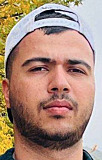
Soheil Fotovati Darestani

About

Age: 21
Nationality: Iran
Religion: Presumed Muslim
Civil Status: Unknown

Case

Date of Killing: January 11, 2026
Gravesite location is known: Yes
Location of Killing: Rudbar, Gilan Province, Iran
Mode of Killing: Extrajudicial Execution » Extrajudicial shooting

About this Case

Government officials threatened to exhume their son's body from the grave if the family revealed the truth.

Information regarding the extrajudicial execution of Mr. Soheil Fotovati Darestani, son of Mohammad Taghi, was gathered from the Hirkani Instagram page (February 5, 2026), various social media posts (January 30 to February 19, 2026), a funeral announcement (February 16, 2026), and the Rudbar Darestan Instagram page (January 17, 2026). Mr. Soheil Fotovati Darestani’s name is also listed as entry No. 1038 on the official website of the Presidency of the Islamic Republic of Iran. (Official Website of the Presidency of the Islamic Republic of Iran, February 1, 2026)

Soheil Fotovati Darestani was a 21-year-old young man from the Darestan neighborhood in Rudbar County, Gilan Province. He owned a small mobile phone repair shop and worked in the repair field. Additionally, he was a conscript in the Law Enforcement Force, with about two months left before finishing his mandatory service. Mr. Fotovati was known for his active, hardworking nature and enjoyed sports. He was the only son in his family. (Hirkani, February 5, 2026)

According to an informed source, during the December 2025 protests, Mr. Fotovati was profoundly shocked after witnessing the killing of his close friend, Mr. Mostafa Khorsandian, on January 8, 2026, while fulfilling his mandatory military service. Following this, he took off his military uniform and abandoned his post.

Following this event, security forces pressured Mr. Fotovati’s family by deceiving his father into persuading his son to return to his post, assuring him, "We will not do anything to him." (Hirkani, February 5, 2026)

Background of Extrajudicial Killings by the Islamic Republic of Iran

The Islamic Republic of Iran has a long history of politically motivated violence in Iran and around the world. Since the 1979 Revolution, Islamic Republic operatives inside and outside the country have engaged in kidnapping, disappearing, and killing a large number of individuals whose activities they deemed undesirable. The actual number of the victims of extrajudicial killings inside Iran is not clear; however, these murders began in February 1979 and have continued since then, both inside and outside Iran. The Abdorrahman Boroumand Center has so far identified over 540 killings outside Iran attributed to the Islamic Republic of Iran.

Dissidents have been assassinated by the agents of the Islamic Republic outside Iran in countries such as the Philippines, Indonesia, Japan, India, and Pakistan in Asia; Dubai, Iraq, and Turkey in the Middle East; Cyprus, France, Italy, Austria, Switzerland, Germany, Norway, Sweden, and Great Britain in Europe; and the United States across the Atlantic Ocean. In most cases, there has not been much published, and local authorities have not issued arrest warrants. But documentation, evidence, and traces obtained through investigations conducted by local police and judicial authorities confirm the theory of state committed crimes. In some instances, these investigations have resulted in the expulsion or arrest of Iranian diplomats. In a few cases outside Iran, the perpetrators of these murders have been arrested and put on trial. The evidence presented revealed the defendants’ connection to Iran’s government institutions, and an arrest warrant has been issued for Iran’s Minister of Information.

The manner in which these killings were organized and implemented in Iran and abroad is indicative of a single pattern which, according to Roland Chatelin, the Swiss prosecutor, contains common parameters and detailed planning. It can be ascertained from the similarities between these murders in different countries that the Iranian government is the principal entity that ordered the implementation of these crimes. Iranian authorities have not officially accepted responsibility for these murders and have even attributed their commission to internal strife in opposition groups. Nevertheless, since the very inception of the Islamic Republic regime, the Islamic Republic officials have justified these crimes from an ideological and legal standpoint. In the spring of 1979, Sadeq Khalkhali, the first Chief Shari’a Judge of the Islamic Revolutionary Courts, officially announced the regime’s decision to implement extrajudicial executions and justified the decision: “ … These people have been sentenced to death; from the Iranian people’s perspective, if someone wants to assassinate these individuals abroad, in any country, no government has any right to bring the perpetrator to trial as a terrorist, because such a person is the implementing agent of the sentence issued by the Islamic Revolutionary Court. Therefore, they are Mahduroddam and their sentence is death regardless of where they are.” More than 10 years after these proclamations, in a speech about the security forces’ success, Ali Fallahian, the regime’s Minister of Information, stated the following regarding the elimination of members of the opposition: “ … We have had success in inflicting damage to many of these little groups outside the country and on our borders.”

At the same time, various political, judicial, and security officials of the Islamic Republic of Iran have, at different times and occasions, confirmed the existence of a long term government policy for these extrajudicial killings and in some cases their implementation. 

Read more about the background of extrajudicial killings in the Islamic Republic of Iran by clicking on the left hand highlight with the same title.

December 2025 Protest Background

(This background has been prepared based on the initial information at the start of the protests and will be updated at the earliest opportunity.)

On December 28, 2025, merchants in Tehran’s Grand Bazaar went on strike to protest the country’s deteriorating economic conditions. Protests were sparked by the rapid depreciation of the Iranian rial to the U.S. dollar which reached a record low of 1.4 million rial to dollar by late December. High inflation, reaching 42% by December, further deepened Iranians’ economic frustrations. By December 30, protests had spread to half of Iran’s provinces, including Alborz, Khuzestan, Fars, Hamedan, Kermanshah, Khorasan Razavi, West Azerbaijan, Hormozgan, Chaharmahal and Bakhtiari, Markazi, Isfahan, Zanjan, and Yazd. In addition to labor strikes, Iranians also held street gatherings and marches, and convened rallies at universities and outside government offices. 

During the first week, protest slogans largely focused on economic grievances and government corruption, but by the second week, evolved into anti-regime chants targeting the Supreme Leader Ayatollah Ali Khamenei and the Islamic Republic itself. Chants of “Death to Khamenei” were recorded in several cities including Tehran, Arak, Urmia, Qom, and Zahedan, as well as “death to the dictator”, “we don’t want an Islamic Republic”, and calls for a return of the Pahlavi dynasty: “Pahlavi will return”, and “long live the Shah”.  While economic hardships initially triggered the protests, protest demands increasingly evinced calls for an end to the theocratic government altogether. 

On January 8, the 12th day of protests, Iranian authorities instated a nationwide internet blackout. By this time, protests had spread to at least 22, a majority, of Iran’s provinces, half of which are minority regions, including Kurdistan and Khuzestan which experienced some of the largest protests outside of Tehran. According to the Human Rights Activist News Agency (HRANA), protests had taken place in at least 585 locations across 186 cities in all of Iran’s 31 provinces by the 15th day. Image and footage of scores of bodies in a makeshift morgue in Kahrizak Forensic Medical Center in Tehran surfaced online amid the blackout around January 10. Testimonies obtained by the Abdorrahman Boroumand Center (ABC) described a chaotic environment at Kahrizak, with vehicles unloading piles of corpses, and people forced to identify their loved ones among the body bags strewn on the ground. 

ABC documented the first protester death on January 1st. ABC has received testimonies from several provinces, including Mashad, Tehran, Yazd, Kurdistan describing protesters shot in the heart, throat, or head, suggesting the security forces were shooting-to-kill. Eyewitnesses also described security forces' use of machine guns at protest sites, underscoring the indiscriminate and arbitrary nature of the shootings. It is difficult to ascertain the exact number of protesters killed due to the ongoing blackout as of this writing on January 15, 2025, but preliminary estimates indicate a high death toll, at minimum in the several hundred, but potentially in the thousands.  

Initial government statements varied at the onset of the protests, with President Masoud Pezeshkian instructing the Minister of the Interior to “engage in dialogue with the protesters’ representatives to address their legitimate demands” on December 30, 2025, with Ayatollah Khamenei stating during a Friday sermon on January 3, 2026 that, “officials must talk with protesters”, but added “rioters must be put in their place”. As protests became more widespread and focused their demands for an end to clerical rule, the Iranian government’s statements became more unified and hostile towards protesters. On January 5, Iran’s Chief Justice Gholam-Hossein Mohseni-Eje’i said that the government would show no “leniency” towards protesters and called for expedited judicial proceedings. President Pezeshkian claimed protesters, or “rioters” were foreign agents, and that “These individuals were trained both inside and outside the country. Foreign terrorists were brought in to set fire to mosques, bazaars, and public spaces. They have killed people with guns, burned them, and beheaded others. Truly, such atrocities are not the work of our people.” On the same day on January 11, Iran’s Cabinet of Ministers released an official statement reiterating Pezeshkian’s statements, writing: “The Zionist regime and the criminal U.S ... have repeatedly emphasized their efforts to incite chaos. They have exploited the current situation by deploying mercenaries and terrorists across the country to attack and martyr a large number of our dear citizens, as well as our devoted police, Basij, and security forces”. On January 13, Ali Larijani, secretary of Iran’s Supreme National Security Council stated, “We declare the names of the main killers of the people of Iran: 1 - Trump, 2 - Israeli Prime Minister Benjamin Netanyahu”. During an interview with Fox News on January 14, Iranian Foreign Minister Abbas Araghchi described reports that thousands of protesters had been killed by security forces as an "exaggeration" and “misinformation campaign”, and that the number of deaths were “only hundreds”. 

Abroad, U.S. President Donald Trump warned on January 1, “If Iran violently kills peaceful protesters…the United States will come to their rescue. We are locked and loaded and ready to go”. He took again to Truth Social, writing: “Iranian Patriots, KEEP PROTESTING - TAKE OVER YOUR INSTITUTIONS!!! Save the names of the killers and abusers. They will pay a big price” on January 13. Later that same day, he wrote, “HELP IS ON ITS WAY”. Reza Pahlavi, the exiled son of Iran’s former Shah, also issued several statements echoing President Trump’s statements that foreign assistance was coming, and called for more strikes and demonstrations on January 10 and 11: “Our goal is no longer merely to come to the streets; the goal is to prepare for seizing the centers of cities and holding them”. 

On 1 February 2026, the Office of the President of Iran published a list containing the details of 2,986 individuals who were killed during the protests. On 3 February 2026, the number was increased to 3,038. (IRNA, 8 February 2026).

In an official statement, the Government of Iran emphasized that the list was compiled “by aggregating the names prepared by the Legal Medicine Organization of the country and cross-referencing them with the database of the National Organization for Civil Registration. The discrepancy of 131 individuals compared to the previously announced figures is due to a number of unidentified bodies and inconsistencies in the registration of national identification numbers of some of the deceased within the Civil Registration system, which will be corrected and reflected in a supplementary list as soon as the necessary amendments are made.”

At the time this list was published, the Boroumand Center’s ongoing and continuously updated list included names that did not appear in the government’s list. The Human Rights Activists News Agency (HRANA) had also reported that it had documented more than 6,000 deaths.

Mr. Soheil Fotovati Darestani’s threats and extrajudicial execution

According to available information, three days after abandoning his post, Mr. Fotovati Darestani was shot by security forces at around 3:00 a.m. on Sunday, January 11, 2026, while he was at a pharmacy to purchase medication (Hirkani, February 5, 2026).

The shooting occurred in front of a Basij base in Rudbar when occupants of two security force vehicles opened fire on Mr. Fotovati Darestani, hitting him in the neck. He was then taken to Poursina Hospital in Rasht, where he received medical treatment for two days. However, he ultimately died from his injuries on January 13, 2026. (Hirkani, February 5, 2026; Tavaana, February 3, 2026).

Three days after his death, on January 15, 2026, Mr. Fotovati Darestani’s body was returned to his family under unclear circumstances, and he was buried in Darestan, a neighborhood of Rudbar. (Hirkani, February 5, 2026).

His family was pressured into accepting the government's official narrative that he had been killed by "terrorist elements."

A memorial ceremony was held on January 17, 2026, marking the third day after his death. His fortieth-day memorial was held on February 19, 2026, at his gravesite in Darestan cemetery, Rudbar, attended by family and the public. Attendees honored his memory with poetry recitations and expressions of grief. (Rudbar Darestan Instagram page, January 17, 2026; Saman Montazeri Instagram page, February 19, 2026).

A video shared on social media shows Mr. Fotovati Darestani’s father and sister performing the song "Az Khoon-e Javanan-e Vatan Laleh Damideh" on the santur in his memory. (Manoto TV, February 24, 2026).

Officials’ Reaction

According to reports, after Soheil Fotovati Darestani was killed, security forces pressured his family to accept the government's official narrative that he was killed by "terrorist elements." They threatened to exhume his body from the grave if the family spoke the truth. (Live Iran News, February 1, 2026)

Familys’ Reaction

During the fortieth-day memorial service for her son, Soheil’s mother asked the attendees to applaud in honor of his courage. (Saman Montazeri Instagram page, February 19, 2026).

Impacts on Family

No information is available about how Mr. Fotovati Darestani’s death affected his family.

Correct/ Complete This Entry