
The West Has No Logic in Human Rights Except Force
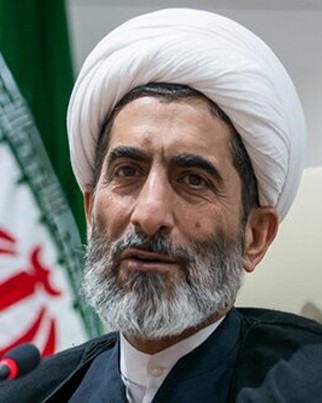
Deputy for Cultural Affairs of the Judiciary:
«The West Has No Logic in Human Rights Except Force»
The Deputy for Cultural Affairs of the Judiciary, stating that the logic of Islam is the most complete logic, said: “Westerners have no logic in human rights except force.”
According to the Iranian Students’ News Agency (ISNA) in Khorasan Region, Hojjat-ol-Islam Hadi Sadeghi, speaking at a series of “Bazm-e Andisheh” programs held with the participation of intellectuals and cultural activists on the topic of human rights in Islam and the West at the "Astan-e Qods Razavi Youth Institute", said: “The logic of Islam is founded on justice, wisdom, and mercy. In the logic of Islam it is said that no human being has superiority over another, and even if someone does not share your religion, since he is your brother in creation, you must observe his rights. God has named these rights haqq-ol-nās.”[literally, the right(s) of others]
He continued: “The whole logic of Islam is not the logic of force; rather, the logic of the reward of Paradise and an even higher logic, which is the truth itself, exist within Islamic reasoning.”
The Deputy for Cultural Affairs of the Judiciary added: “The Commander of the Faithful (peace be upon him) says that some obey God out of fear, and some obey Him out of desire for Paradise; and these are a transactional form of obedience. God has also said that most people act based on fear or longing.”
Sadeghi added: “There is another group that obeys God because they love God and are devoted to Him, and this logic is of a very high order.”
He described the accusations of human-rights violations in Iran as baseless, adding: “According to the Western human-rights framework, Iran has been accused of violating human rights in more than one hundred instances.”
The Deputy for Cultural Affairs of the Judiciary said: “The main criticisms the West raises about human-rights violations in Iran concern a few issues, one of which is the matter of executions. They tell us to abolish executions, whereas this is a right God has granted to human beings and is a law of Islam; it cannot be abolished. According to United Nations regulations, religion is to be respected, and this is one of our firm religious laws.”
He continued: “Some countries have abolished the death penalty because it is said to be irreversible. But we say that irreversibility is no reason not to carry out punishment. Other punishments, such as imprisonment or flogging, are also irreversible.”
Sadeghi identified the non-recognition of same-sex marriage, punishment of offenders under 18, and the non-recognition of the Baha’i faith as other issues the West raises to accuse Iran of violating human rights.
The Deputy for Cultural Affairs of the Judiciary said: “Unfortunately, a wrong wave of homosexuality has spread across the world, and they say that because human beings desire one another, they must have the right to such a law. In response, one must say: should every desire a person has be turned into law? This is a false desire. Moreover, in the United States and England, the majority oppose homosexuality.”
Regarding punishment of individuals under 18, he said: “Punishment below the age of 18 is conditional upon rational maturity of the offender. It is not the case that a child is simply punished; the child must first be sent to rehabilitation centers.”
On the issue of Baha’i faith in the country, Sadeghi said: “In Iran no one is punished merely for being a Baha’i, but there are some troublemakers who want to stir disorder and create human-rights disputes.”
The Deputy for Cultural Affairs of the Judiciary expressed the view: “During Mr. Khatami’s administration, Baha’is received instructions to go to schools, government offices, and universities and create human-rights disputes. But they must know that in our country only a few religions are officially recognized.”
He continued: “Baha’is do not have the right to proselytize or convert Muslims through preaching. Just as we have the right to prevent physical viruses, preventing moral viruses is also our duty.”
Regarding alleged “inquisition” in the country, Sadeghi said: “It is said that Iran does not allow conversion [from Islam], but in response one must say that everyone is free to change religion; they are only not free to announce it publicly, because public announcement has consequences. We have never had religious inquisition, and that is completely forbidden.”
He also said: “Freedom of expression is not unlimited anywhere in the world. Every country imposes certain limits. For example, they say its limit is national security, meaning when national security is at risk, expression must be restricted.”
The Deputy for Cultural Affairs of the Judiciary, stating that if we wish to understand and interpret human rights properly, we must first look to the Commander of the Faithful (peace be upon him) and then to Abā Abdillāh (peace be upon him),” and added: “The methods of the people of darkness [i.e. unfaithful] and oppression have not changed. Their principles, foundations, and ideology remain the same and is repeated over and over again; only the examples and tools they apply have changed.”
He remarked: “Today many voices claim the banner of human rights in the world and have deafened the heavens. Today the world is run by those who have created a form of humanitarian imperialism; and at times they have even launched ‘humanitarian oppression’, ‘humanitarian killing’, and ‘humanitarian invasion’. These are the paradoxes of human rights, meaning they commit aggression and oppression but under a humanitarian façade, as in the occupation of Afghanistan and Irak.”
Raising the question of the origins of human rights, Sadeghi said: “Western cultural thought on human rights falls into several categories. The first and most popular are those who pursue natural rights and believe that these rights reside within our nature, though even this view has been challenged by some.”
Pointing to the greater rights of some countries in the UN Security Council, he said: “Up to now not a single serious condemnation has ever been issued against the United States or England, and this is because of their logic of force, by which they sometimes bring nations to sign treaties through coercion or deception.”
Raising the question of why great powers have turned human rights into an instrument of force, Sadeghi said: “They say there are only three options: the first is to leave societies alone so that everyone fights one another, which is to no one’s benefit. The second says there must be a ruler to prevent such conflict, and they say this ruler must act like a village chief.”
Sadeghi added: “In one treaty it is said that non-conventional weapons must be destroyed, but the Americans do not comply because they have power and force. From the beginning of the world, the logic of force has prevailed, and until the reappearance of Imam Mahdi (may God hasten his advent), this logic will continue.”