Testimony of Behruz Asadi
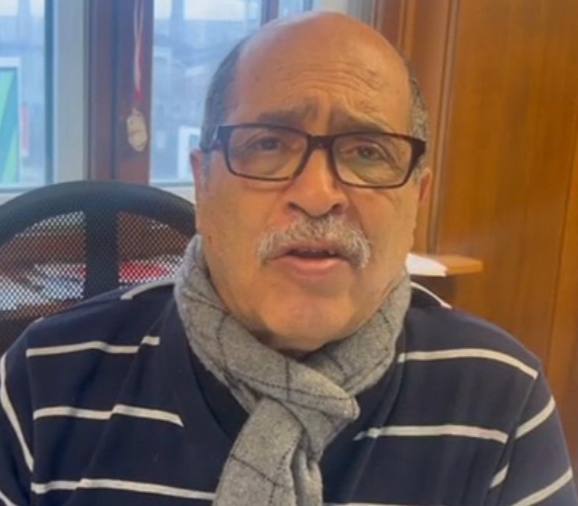
In this testimony, Mr. Behruz Asadi gives a brief account of his activities from the time he was a member of the Student Confederation before the Revolution up to the present day. He also describes his observations of how student activism was suppressed during the first decade after the Revolution, both inside Iran and abroad.
Early Years and Return to Iran
My name is Behruz Asadi. I was born in 1955; I am a human rights activist and political activist. I studied from the first grade through twelfth at Htef School in Isfahan, and after receiving my high school diploma, I completed my military service. In 1975, after completing my service, I came to Germany to continue my education. My sister was at that time a member of the Confederation [of Iranian Students](1), which gave me a certain political awareness. I soon joined the Confederation myself.
On 24 April 1982, an armed group wearing paramilitary jackets and shouting “Allah Akbar” attacked the dormitory of Iranian students.
Return to Iran After the Revolution
During the Revolution, we occupied the Iranian Embassy in Germany. Two days before the victory of the Revolution, it was announced that two airplanes would fly to Bushehr and Tehran to repatriate the employees and all those working on nuclear projects with Siemens. We tried to make arrangements so that we could accompany them to Iran. After much difficulty, we managed to get in touch with Karim Sanjabi (2). Eventually, our request was approved, and I traveled to Iran on the second plane.
When we arrived in Tehran, Toopkhaneh Square and the Police Headquarters were still burning. We tried to find a private car by any means. There were checkpoints along the way; every route was under the control of different groups. Each [political] faction had set up its own local posts, monitoring people’s movements.
In Isfahan, political groups gathered in public squares, particularly along Chaharbagh Avenue. My friends and I often went there. I was acquainted, in one way or another, with various individuals and groups. At that time, there was no hostility between people yet, and the wave of arrests had not begun. The political structure was in transition, but no clear order had yet been established. I could move about freely and felt a genuine sense of joy.
We usually met in Ayneh Park, located to the left after the Si-o-Seh Pol Bridge. Along Chaharbagh, various groups would occasionally set up book stalls. Each political movement had its own office or a small base - a place to keep books and organize group activities. The prevailing atmosphere of that period was one of dialogue and exchange.
In Tehran, almost all political groups had public offices, but in smaller cities like Isfahan, activities were more limited. Most of the students who had returned from abroad or were members of the Confederation, were active in these circles. Each group operated independently. For instance, the Sepehrion group was on one side, and on the other, members of the Revolutionary Organization of the Tudeh Party. The mix of people was diverse. Alongside these groups, local forces - such as the Tudeh Party, branches of the National Front, and other movements - were also active.
We were still in the euphoria of the Revolution. All discussions took place at the book stalls or face to face; and often turned into a confrontational way. Monarchists or supporters of the Shah were nowhere to be seen. The other side’s only source of legitimacy was their leader, and no one dared to say anything against him. For example, if someone mentioned Khomeini’s name in a critical way, they could be torn apart on the spot.
At that time, the groups were still tolerated; they each set up their own book tables or stalls. But debates had already begun. Unfortunately, we had never learned the culture of dialogue, and that always led to tension. Sometimes arguments turned physical, though not on a large scale. Among the targets of the Islamic factions, the communists were the main ones. The religious groups believed that communists must not come to power, and that was one of the key sources of conflict.
The turning point came when, during the first referendum on regime change, it was announced that the only option would be “Islamic Republic” — not “Democratic Republic.” That was when intellectuals began to realize what this meant. At that time, we were still in a naïve state of excitement, thinking the important thing was simply that it would be a republic. But the “Islamic Republic” had never said it intended to establish a system based on Shi’a Twelver clerical rule under the doctrine of velayat-e faqih (Guardianship of the Jurist). They knew exactly what they wanted; we did not. That was one of the weaknesses of our collective understanding. These discussions began after the referendum of 1 April 1979.
The situation was quite similar in Tehran, except that in Tehran, the groups had their official and clearly marked locations. In Isfahan, the offices were mostly informal or hidden. For example, they might temporarily use a caravanserai as a meeting place where activists gathered. At first, this diversity was very positive, it created energy and a positive vibe. But within a short time, everything fell apart.
Rise of Muslim Student Groups
Meanwhile, religious groups were gaining ground day by day. Some people saw Khomeini as an anti-imperialist leader and chanted slogans such as “We follow your command, Khomeini; we are all your soldiers.” The religious factions and Muslim students began organizing gradually, step by step. The Qods Muslim Students’ Association was one of the groups that played a prominent role. One of its members later became the head of Isfahan Radio and Television. He and his brother were both influential figures in activities inside Iran. These individuals had networks stretching from Tehran to Isfahan and managed to take over parts of the official structure. They were connected to the Muslim Students’ Association and assumed many responsibilities, gradually advancing their control. They turned the dormitories into their centers of power. Some of them had been released from prison during the Revolution - for example, on the day of 11 February 1979 - and believed that events were now unfolding in their favor, though in reality it was an illusion. Others were rigid in their thinking, convinced that nothing besides Islam should exist. Unfortunately, a large segment, including the Tudeh Party, came under their umbrella and defended them, while smaller groups that still had independent voices were suppressed.
Their real base of power was the mosques. They were ardent devotees of Khomeini. Before the Revolution, mosques had traditionally brought people together, but now they were organizing at the neighborhood level; their mission was to identify residents and labeling them: this one is a communist, that one is counter-revolutionary. In this way, they drew dividing lines within communities. These networks were building their own structures and launching instruments of repression. The arrests and executions - especially those carried out by Khalkhali (3) - only strengthened their resolve and made them deal differently with anyone who opposed them.
Gradually, confrontations moved from verbal debates to physical clashes, and then arrests began. For instance, the “Zahra Khanom” group had completely taken over the area in front of Tehran University. Zahra Khanom was a woman known as a loud, zealous Muslim agitator and cheerleader. She accused others of being counter-revolutionaries and communists and said their gatherings had to be stopped. She claimed that if they were not suppressed, they would lead the Revolution to failure. Her actions were supported by Hezbollah groups.
At that time, we still spoke of a “culture of tolerance” - a culture based on learning to talk and to listen to opposing views. In the beginning, it worked well: we could speak freely without fear. But soon they began identifying and arresting people. That became one of the main reasons for the wave of arrests. Those who appeared on the streets were noted, and the hope and independence and freedom we had dreamed of turned into a mirage. The culture of tolerance gave way to a culture of force, coercion, arrest, and imprisonment. The price of activism was heavy, and because of that, few dared to speak out.
No one dared asking what the separation of religion and state really meant. The “99 percent referendum” (4) created an atmosphere of fear and intimidation. People withdrew into private life, while the intellectual and political class, now a minority, entered into the service of the system.
From that point on, a wall of distrust rose between the people and the government, and it remained. This period was marked by repression, the mass arrests of the 1980s, and other measures that followed. Slogans such as “Death to the counter-revolutionary traitors” were chanted, and the atmosphere became increasingly radicalized.
In the election for the Assembly of Experts, which was convened to draft the new constitution, voter participation dropped by about 40 percent compared to the earlier referendum on the Islamic Republic. The constitutional referendum itself was boycotted by most political parties, except for the Tudeh Party, that adhered to participation. The public mood during the vote was cold and indifferent. A communist journalist from Le Monde wrote that he had gone to a mosque in southern Tehran on the day of the referendum; the weather was fine, he reported, but not a single person was there.
Meanwhile, the ruling faction had extensive resources at its disposal. Internal splits, the Sino-Soviet divide, and the lack of a real popular base all contributed to the defeat of rival movements. Most leftist organizations, apart from the Fadaian-e Khalq (People’s Fedayeen Guerrillas) and the Mojahedin-e Khalq (MEK) ) [Translator’s note: two groups identified as terrorist organizations, known for committing violent acts both before and after the revolution against the people of Iran and foreign nationals, including Americans, residing in Iran], had little influence. These two were the largest and most influential groups. The regime easily suppressed members of the Confederation and cut off our networks of support; we had no power to resist.
Those of us who were members of the Confederation felt like strangers when we arrived. We knew what was happening, but in practice no one considered us part of the scene. Within just one year, everything had changed completely. In the first wave of attacks, groups acted mostly through beating people, scattering books laid out on book tables, and causing physical disturbances. At the beginning, no firearms were used; only punching, kicking, and overturning book displays. Gradually, clubs and sticks appeared. I never saw anyone pull a gun or start shooting immediately, but violence kept increasing. I think this escalation intensified four or five months after the Revolution.
Return to Germany
After about a month and a half, I returned to Germany. Before that, I had gone back to Iran to continue my studies. I wanted to study and serve my country, but in that atmosphere, it was impossible. I saw that nothing had changed; the same patterns of arrests, attacks, and surveillance had begun again. Then came Banisadr (5), who introduced the idea of a “Cultural Revolution” (6) alongside the Islamic Revolution.
In fact, the Revolution had taken place in 1979, and about a year later we began to organize against the Islamic Republic. The peak of these activities came in 1981, when Hezbollah attacked our student dormitory in Germany.
Attack by the “Qods Association” on Student Dormitories
I was living in Mainz, and over time I stayed in different student dormitories. First, I lived in a Protestant dormitory, then I moved to the university dorm, and later to a Catholic one, until eventually I entered the workforce.
At that time, I mean before the mass executions of the 1980s, several groups were active: the Islamic Association, the Tudeh Party, and the Majority faction (a branch of the Fadaian-e Khalq (People’s Fedayeen Guerrillas)). But our main rivals were members of the Qods Association, who promoted the Islamic Republic and presented themselves as Muslim students. Next came supporters of the Tudeh Party. We often argued with them in the university cafeteria, but since we were greater in number, we generally had control of the space. The others were scattered, coming from different cities, and therefore did not dare to confront us directly.
Their activities included setting up book tables, distributing propaganda materials, and slipping leaflets under doors in student dormitories. The leaflets often carried quotations from Ruhollah Khomeini or from the Supreme Council of the Cultural Revolution, declaring that their goal was to prevent “counter-revolutionaries” from taking root, since, they claimed, such people sought to distort Iran’s image and project a negative image of Iran.
Some individuals among us still sympathized with them, while others were too intimidated to take a stand. We, however, had no choice but to resist. It was important not to let them gain ground. We did what we could to stop them, and eventually they shifted their activities underground. Their meetings became secret, and they tried to recruit people quietly at various gatherings instead of holding public events.
We had come with the spirit of the Confederation, but once we saw what the Islamic Republic was doing, we became completely opposed to it. Naturally, this led to open confrontations. For example, one time we overturned their book table; we were young, and a fight broke out. On another occasion, they chased us with knives, and we ran away. We had no weapons, nothing at all. When the police arrived, we told them that they had attacked us with knives and thrown the weapons from the eleventh floor. The police went down with flashlights and found several knives on the ground.
At that time, we had reacted to the executions, and that was why they were angry with us and attacked us. Three nights before the attack, they had gathered and planned to attack us. We received information that a meeting had taken place in the eleventh floor of the single men’s dormitory. We gathered and went to their room. We opened a fire extinguisher and threw it inside through the door. They opened the window and shouted “Help, Help!" in German.
On 24 April 1982, the dormitories of our university were attacked with the aim of suppressing students. The attackers were armed men wearing paramilitary jackets and shouting “Allahu Akbar”; they stormed the student dormitory while shouting "God is great". They had a list of names. My name was in the list of married dorm residents; they attacked the men’s dormitory first.
That day, my camrades called to inform me that there had been an attack. I went downstairs and saw groups of them entering the dormitory, shouting “Allahu Akbar.” There were around 85 to 90 of them; they had all come by bus and were hiding behind a hill near the dorm residence. Exactly on time, Mohammad “Ringo” (7) gave the order, and the attack began. One of them was a man wearing glasses. I hit him in the eye with my palm, and his glasses broke. Then the military police and emergency forces surrounded the dormitory building; ambulances arrived, and the students were taken to the hospital. At least one person was killed. A girl died two days later. The police said she had suffered a heart attack. Her husband and roommates had been beaten, and their room had been looted. Some students had jumped from the lower floors to escape. The attackers had a hit list of names for each floor and moved upward, cutting the telephone and fire alarm cables so that even emergency calls could not be made. Everything had been planned in advance. All of these actions were coordinated with the Iranian embassy and with Mohammad “Ringo”.
That day, at least eight to ten people were injured. Some went to the hospital, some were beaten with whips or nunchaku, a traditional Japanese cold weapon, and they even had knives. The wounded were treated, but almost all of them needed medical attention. From the beginning of the attack, it took about thirty to forty-five minutes for the police to arrive. First two officers came, then four, then six, and later the military police arrived as well.
The university chancellor came too; I knew him—his name was Professor Herbail. I asked him to have those people arrested, because my friends had been beaten. The police entered, ambulances came, and treatment began; some were taken to the hospital. The attackers left the scene shouting “Allahu Akbar, Khomeini Rahbar” (“God is Great, Khomeini the leader”) as they marched toward the city, and many of them were arrested. During detention, when the police asked for their identity almost all of them replied, “Mohammad Mosalman” (“Mohammad the Muslim”). Four days later, the Iranian ambassador went to visit them in the detention centre. They were released, sent off with wreaths of flowers, and returned to Iran. Among them was Kazem Darabi, one of the organizers of the Mykonos assassination. Later, he went back to Iran, returned to Germany again, and organized the assassination of Sadegh Sharafkandi (8). He then went back to Iran once more and became the head of the Islamic Cultural Center. The attackers all returned to Iran without ever standing trial.
After the dormitory attack, some of us, including myself, appeared in court. But none of these people were ever truly punished. We had a lawyer; we were the plaintiffs; but it was as if “Jesus to his faith, Moses to his own”; everyone sang their own song. The excuse they presented was that those we were taking action against were no longer within reach. In reality, there was strong diplomacy working behind the scenes. We couldn’t even bring action against the permission issued to them to leave Germany. In those days, human rights did not exist in the way it does today.
After this attack, there were also tensions in Hamburg related to the Islamic Center (the Blue Mosque), but they were not comparable to what we experienced. The attack of 24 April 1982 was an assault by the Islamic Republic against its opponents abroad. Its main aim was to suppress, beat, destroy, and silence dissenting voices. Some violent incidents occurred in Paris too.
Asylum in Germany and the Founding of the “Democratic Iranians Abroad”
In those days, we stood up to the members of the Qods Association as much as we could and did not let their activities grow. We saw people whom we knew were killers. But others said, “Let them go.” We couldn’t tell the police to do anything, because they said it was not an important matter; but I knew who those people were. That was why these fights kept happening. They showed that they were capable of repression.
In 1982, we applied for asylum. At that time, Der Spiegel, the biggest political magazine in Germany, published a photo - of me with one of my friends, who is still in Germany today- under the caption “Victims of the Hezbollah Attack.”. My lawyer sent that picture to the court and said, “These individuals must be accepted immediately.” Three weeks later, our application for asylum was accepted without any hearing. Back then, very few people received asylum. My passport was due to expire in September that year, and I had been told it would not be renewed. After that, my lawyer filed the asylum application, and within three weeks our asylum status was granted.
During that period, after the end of the Confederation’s activities, we founded an organization called “Democratic Iranians Abroad.” Former Confederation members, including Mahmoud Rasti, Farhad Seminar, Manouchehr Salehi, and some members of the National Front, also took part. I served as the organization’s secretary for defense and international affairs for fifteen years. The creation of this organization was important, because we felt that we had a historical duty to view the Confederation as an achievemement.
Pressure on my Family and the Suspicious Death of My Brother
When I was active in Germany, several times the door of our house in Iran was marked with the words “House of the Counter-Revolution.” This caused great distress to my mother. It wasn’t just once; it happened repeatedly. My mother used to say that she would call a painter to come and cover the writing, but soon after, it would be written again. These incidents happened between 1983 and 1985.
My brother was still in Iran. He was a well-known figure in the field of environment and wildlife, and at that time he was the head of the Department of Environment for Bandar Abbas and the Persian Gulf region. They wanted him to attend the Friday prayers. My brother, was known as “the father of the Iranian cheetah” and had carried out important scientific and conservation work, among them was following up on the condition of Lake Urmia and issues related to the Persian fallow deer. He died in a car accident, but his death remains a matter of doubt for us to this date. We are still not sure whether it was truly an accident or something else happened.
The reason we are suspicious about his death is his increasing influence and scientific authority in the field of environment and wildlife. He organized international conferences and congresses on cheetahs in Iran and, and through his critical articles - for instance, against certain groups in Gilan who illegally hunted fur animals and smuggled them to Turkey- had drawn attention to himself and had made enemies. For years he wrote for environmental newspapers and journals and was respected as a person who spoke with scientific reasoning. Then suddenly, he disappeared.
Two years before the accident, my brother wrote continuously. For example, for a time he wrote in the Hamshahri newspaper about the environment and wildlife under a column titled “What Do You Know?” During that period, he was establishing his position as someone who could speak with scientific credibility, but I still don’t know why he left us so suddenly.
Death Threats By Agents of the Islamic Republic
In 1992, a list was published which was called the “blacklist.” The information had been leaked by someone to a newspaper in Germany, and the newspaper informed the German criminal police, who in turn contacted us. There were three names on that list. At that time, I together with Bahman Nirumand (9) decided to make the matter public. We appeared on German national television, and the police came to our homes. The police gave me a set of security instructions and told me not to go to work. They also wrote a letter to my employer.
I was one of the founders of the organization for the Defense of Refugees, one of the strongest human rights organizations in America, which is also one of the most active in Germany. The organization’s spokesperson wrote a letter to the German Minister of the Interior using the initials of my name (B.A.), saying that this person’s life is in danger, and if anything happens to him, you will be held responsible.
At that time, all my energy was devoted to political activities, and that in my capacity as the secretary of the “Democratic Iran Abroad.” I spent my days and nights on issues related to Iranian asylum seekers, participated in all the gatherings, and was one of the active figures in the political and public scene. During that time, Bahman Nirumand and I came to the conclusion that the only protection we had was public opinion. We didn’t know why the police had contacted us. I asked them directly: “Why have you come here to warn me? Go to the nest of the Islamic Republic’s spies.” They replied: “We didn’t come to discuss politics. We came to tell you that you must be cautious. We have no concrete information right now, but we are obliged to issue this warning.” We realized that the only way to protect ourselves was to rely on public attention. If anything happened to us, they would say they had warned us and that our safety was our own responsibility. The police were obliged to come and issue the warning to prevent any incident.
However, I was not threatened to death only that one time. Recently, in November 2024, officers from the German criminal police came to my office again. They said: “We don’t have any concrete evidence or documents at the moment, but you must know that certain security measures are necessary, because you are politically active and frequently speak about the Islamic Revolutionary Guard Corps.” A female officer was in charge of the case and gave me a number to share with my family and political friends. That number connected directly to an emergency response center, so that, for example, if you called 110 and mentioned that number, they would immediately know what the issue was.
They told me that because of my participation in weekly demonstrations against the Revolutionary Guards and my numerous interviews and articles in newspapers, everyone was aware of my activities. They brought several papers with them, some red and some yellow. I told them I had no fear for myself, but that if they had any information, they should act immediately. They replied: “That is exactly why we came: to inform you.” They also gave me several addresses to contact in case of emergency.
There was another time when I received a suspicious phone call. The person spoke with a Russian accent and insulted me. I reported the matter to the police. Later, during one of the Saturday demonstrations we regularly attend, there were two people who were said to be Russians. While I was speaking, they were taking photos, so my friends handed them over to the police. After that incident, two police officers came to my home to check whether the house was secure. Because I was the international spokesperson of the Organization of Democratic Iranians Abroad, I carried out many public activities, such as organizing hunger strikes. But that organization no longer exists, because other political groups interfered and destroyed everything. We had a broad and democratic movement with members also in the United States and Europe. In any case, they destroyed that organization, and now it is gone, and I feel its absence; just like the absence of something like the Confederation, I feel the absence of the organization of Democratic Iranians Abroad.
At the time this testimony was written on October 15, 1404, Behruz Asadi was awarded the Order of Merit of the Federal Republic of Germany by the President of Germany for his human rights work in assisting asylum seekers and migrants. He had previously received the Maltese Silver Cross (in 2000) and the Medal of Merit of the State of Rhineland-Palatinate (in 2014.).
-----------------------------
-
The Confederation of Iranian Students was a left-leaning organization with anti-imperialist ideals, composed of Iranian students abroad. Though it had begun with student and unionist goals, from the 1960s onward it became the main opposition to the Pahlavi regime outside Iran.
-
Karim Sanjabi was an Iranian politician, one of the leaders of the National Front, and an opponent of the Pahlavi regime.
-
Mohammad Sadeq Sadeqi Givi, known as Sadeq Khalkhali, the first religious judge of the Revolutionary Court after 1979.
-
The first election after the Revolution, in which the authorities claimed that 99 percent had voted for the Islamic Republic.
-
The first president after the Revolution.
-
The Cultural Revolution began in April 1980 with Ayatollah Khomeini’s decree to purge universities of opposition forces and transform them into scientific environments for the teaching of higher Islamic sciences. The first wave of violence occurred on April 15, during a speech by Akbar Hashemi Rafsanjani at the University of Tabriz. Pro-regime students seized the university's central building, demanding the "cleansing of the university" from those they labeled "elements affiliated with the Shah's regime and other sellouts."On April 18, the Revolutionary Council issued a statement accusing political groups of turning higher education centers into "headquarters for divisive political operations" and obstacles to the fundamental transformation of universities. This statement gave these groups a three-day deadline (from Saturday, April 19, to Monday, April 21, 1980) to close their activity offices within the universities. The Revolutionary Council also emphasized that this decision included libraries, as well as artistic and athletic offices. Opposition political groups refused to close their offices, and throughout these three days, clashes continued between leftist students and Islamic Associations, who took control of the universities with the support of government forces and pro-government paramilitaries. At the end of the Revolutionary Council’s deadline, the violence reached its peak, resulting in hundreds of injuries and several deaths at universities across the country. On April 21, the victory of the Cultural Revolution was declared, and universities were closed for two years. As a result of the Cultural Revolution, a large number of university professors were purged, and a vast number of students were barred from continuing their education due to their political beliefs.
-
Mohammad-Ali Montazeri, son of a prominent ayatollah of the same name who was an associate of Ruhollah Khomeini and part of his inner circle; Mohammad-Ali was reportedly nicknamed after a character from Western films due to the extremity of his revolutionary zeal and militant activism.
-
Secretary-General of the Democratic Party of Iranian Kurdistan, who was killed in the Mykonos restaurant assassination in Germany.
-
A leftist political activist and member of the National Council of Resistance.