Testimony of Keyvan Rafi'i
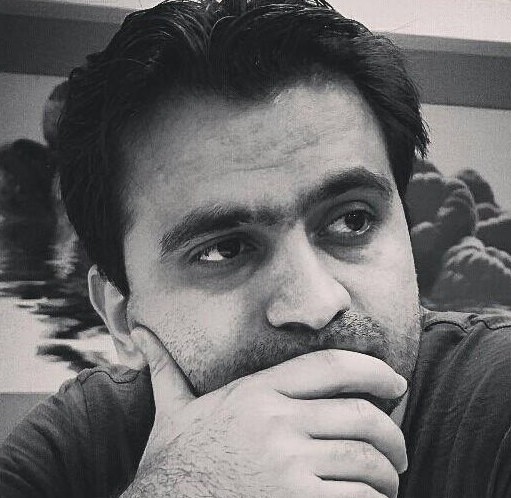
My name is Keyvan Rafi'i. I was born in 1983 in Gonbad-e Kavus, a city in Golestan Province. The last years of my high school coincided with the start of the Reform Movement and the Second of Khordad, which refers to Mohammad Khatami's presidential victory in the May 23, 1997, election under the slogan “Reform.” It was around then that I developed an interest in politics.
In 2003, I enrolled at Azad University of Gorgan to study computer science. We were among the first students admitted to the university's computer science program. Since the university was newly established, its environment was quite small and simple. Because of this, there was virtually no activity that could be called "student activism." Student movements only began to emerge at Azad universities, especially in Tehran, in later years. At Azad University, particularly in Gorgan, there was little activism because most students were local residents and the university was near Gonbad. The first group of students in our department, known as the "first cohort," consisted of around one hundred students. As a result, the university atmosphere was not particularly dynamic, and our activities focused mainly on election-related issues and conflicts among different political groups.
First Arrest and Suspension from University
In 2003, the reform atmosphere that started in 1997 was still ongoing. The Seventh parliamentary election took place that year, reaching its peak in February 2004. In Gorgan, a reformist candidate competed against individuals who would later join the Paydari Front. One notable figure from that period was Taheri, who was supported by Nurmofidi and right-wing factions. Nurmofidi and his allies represented the Supreme Leader’s office in the region. As far as I remember, Taheri was later appointed as the Supreme Leader’s representative. My memory of specific names and dates may not be entirely accurate, but the overall picture remains correct.
Among these political rivalries was a contest between Heydari or Heydarabadi, whom we believed to be the reformist candidate although he identified as an independent, and Taheri’s allies. We thought Heydari was a better option than his opponent. Despite our small numbers, one action we took at the time was distributing flyers during a speech by Nurmofidi, the Supreme Leader’s representative in Golestan Province. This act was considered a disturbance of public order and eventually led to our arrest.
I was first arrested on January 24, 2004. I was detained for thirteen days at the Ministry of Intelligence detention center in Gorgan. I was charged with "disrupting public order." However, no formal case with a clear legal process or definite conclusion was ever established. The case was ambiguous and unresolved—what one might call an "open case." In short, I was held for 13 days and released directly from the same place.
During those 13 days, initial suspicions suggested we might be connected to the Mojahedin-e Khalq Organization (MEK), although no proof supported this claim. Once the authorities learned about our family background and saw that we had no such ties, they treated us better. There were probably a few interrogations during the first two or three days, but afterward, we mostly stayed in our cells or had casual conversations with the detaining officers. It seemed they had no clear plan regarding our case. Eventually, after less than two weeks, we were released.
After I was released, I enrolled in the second semester at the university. At first, I faced no issues with registration or attendance. However, after some time, the university security office barred me from entering the campus without giving a reason or explanation. I assumed this was because of my earlier arrest, which it definitely was, but I never received an official notice or clarification. At that time, we weren’t familiar with the term "starred student," which refers to students banned from continuing their studies due to security concerns. I thought it would be a temporary situation, so I moved to Tehran. My arrival coincided with the anniversary of the July 9, 1999, student protests—the first July 9 during which I was arrested.
Arrest on July 9 Anniversary (18 Tir)
If I am not mistaken, I was near Enghelab Square and Laleh Park in 2004 during the anniversary of 18 Tir (July 9, 1999). I don't remember the event exactly, but I recall being close to Laleh Park and Enghelab Square. I noticed a group of people who seemed confused, as if they expected a gathering to form, but no core group had yet materialized. Without any prior planning or preparation, I took the hands of one or two individuals, and gradually, the initial nucleus of the protest formed. Soon after, a crowd of several hundred people—perhaps 200 or 300—gathered behind us and moved toward Enghelab Square. Afterwards, we continued toward Laleh Park. At Laleh Park, Basij members and plainclothes agents attacked the crowd, dispersing most of the participants. They had anticipated our arrival, having seen us coming from Enghelab Square, and were prepared for a confrontation. The security forces let us cross the street and enter the park. Once inside, they attacked us from all sides when the conditions were favorable for them. Many of our companions quickly scattered. The crowd was not organized enough to resist. In the end, only three or four of us remained and were subsequently arrested. One of them, whom I later recognized, was Behruz Javid Tehrani, along with two or three others I got to know later. I believe that year the Tehran governor gave an interview claiming, "There were no arrests on 18 Tir," even though four or five of us had indeed been detained.
We were held at a police station for about ten days, even though they were only allowed to detain us for 24 or 48 hours. However, due to a dispute between the Law Enforcement Forces and the Ministry of Intelligence, the police refused to transfer us to the Ministry’s custody. Instead, they kept us at the station until we were finally taken to the prosecutor’s office ten days later. There, the judge ruled that our case did not fall under the Public Prosecutor’s Office's jurisdiction and should be referred to the Revolutionary Court instead. When we were arrested, the officers didn't have enough handcuffs, so they chained us together with others detained for non-political offenses like alcohol consumption and drug dealing. As a result, our cases got mixed up. The officers then took us all to the Forensic Medicine Organization for alcohol testing. Afterwards, everyone—even those arrested for alcohol or drugs—was transferred to Ward 209 of Evin Prison, the Ministry of Intelligence’s detention facility. The prosecutor’s representative informed us of our charges on the ground floor of Ward 209. If I remember correctly, the charges were either “propaganda against the regime” or “disturbing public order.” Realizing that our cases had not been separated from those of non-political detainees helped us hide our involvement in organizing the gathering. We claimed that we had no idea what was happening or why we had been arrested.
We spent three weeks in Ward 209. Before our release, we appeared in court, where the judge set bail for us. I used to play guitar, so one of my fingernails was longer than the others. The judge looked at it and asked, "What's with this nail? Aren’t you ashamed?” Then he pushed it inward and broke it, though it didn’t really hurt me. That same day, we were released after posting bail. No verdict was ever issued in that case. Of the six of us, four were arrested for participating in the 18 Tir protests, and the other two were non-political detainees. After about a month in custody, we were released, but the case was never resolved or officially closed. At that time, it was common for authorities to open cases but never process them, or to issue suspended sentences but never enforce them. They used these tactics simply to pressure us. Later, I received a suspended prison sentence after being arrested again on similar charges, but the earlier sentence was never enforced. It was like the ending of a movie left open—you never knew how it would end. Sometimes, these suspended sentences were never carried out, but they always served as a form of control.
Boycotting the 2005 Presidential Election
My friendship with Behruz Javid Tehrani started during our arrest in 2004 and continued afterward. In 2005, when the presidential election took place, our stance on voting clearly changed; we decided to boycott the election. We believed that the electoral process had lost its previous significance, especially since the Reform Era had ended. After eight years of watching the reformists' performance, we concluded that such elections would go nowhere. In our view, the opportunity to benefit from elections was over, particularly with Mahmud Ahmadinejad entering the race. From the beginning, our opinion on him was clear and negative.
Although some reformist candidates participated, we had distanced ourselves from the reformist movement long ago and no longer believed in its effectiveness. Our disillusionment came from our experiences during that time: the promises made by the reformists, our expectations of them, and the fact that none of those promises were kept. Even the improvements we had hoped to see in various areas, including economic conditions, failed to happen.
Back then, we fought for an open society—the civil society that was promised but never achieved. Many of us also worried about economic struggles, yet no real improvement happened. We reviewed a long list of promises but saw no hope in them. So, we decided it was time for a new strategy—one that opposition groups and activists had already tried before—boycotting the elections.
Those of us who once believed in using the voting process to effect change now, as a new generation, believed that it was time to use boycotts as a tool for transformation. We were a small group of active individuals who stayed in touch during that period. In the days leading up to the election, I often visited Behruz Javid Tehrani's home, where some of our friends and others gathered. During these meetings, we shared views and realized that each of us represented a different segment of society.
Behruz, who spent four years in prison after his arrest in 1999, connected with many people during and after his imprisonment, thereby building a network of contacts. This network included former political prisoners, political and civil activists, and figures like Shiva Nazar Ahari, with whom we later developed a close friendship.
Many of these individuals were students, but they also participated in various other areas, including women’s groups. The gatherings at our house effectively formed an informal circle where each member represented a different part of society. By "we," I mean those who shared the experience of interacting and working with representatives from different social groups, especially the younger generation who often had less experience. For opposition groups that had long been involved in such activities, this kind of collaboration was familiar. But for us, much of it was new.
During the 2005 presidential election, our group, which included Behruz and two other friends, concentrated on promoting the boycott campaign. Our aim was to bring the boycott to the streets through graffiti and flyer distribution. We understood that such efforts alone wouldn't have much impact unless they garnered media coverage. Therefore, we devised a plan. After executing these activities, we would film them and share the footage with media outlets and activists abroad so they could publicize our message and ensure it reached a broader audience. We coordinated all these efforts outside the country because, by that time, we concluded that the capacity for street activism in Iran had disappeared and could no longer be relied upon. Ultimately, because of these activities, we were arrested at home in late May 2005 and remained in custody for seven months.
Arrest before the 2005 Presidential Election
Our activities related to boycotting the 2005 presidential election, including writing graffiti, led to our arrest before Election Day. We usually did the graffiti between 3 and 4 a.m., but one night, a man stopped to watch us on the street. On another night, an armed plainclothes officer threatened us, but we escaped. The day after we made our last video recording, security agents broke into Behruz’s house and arrested us. It was the middle of the night, and we were asleep when we suddenly realized armed agents were inside the house.
We were transferred to Ward 209 at Evin Prison, where we faced charges of "propaganda against the regime." As far as I remember, the prosecutor was a man named Jafari, but I might be mistaken. We stayed in Ward 209 for about seven months. However, Behruz was detained longer because his charges were changed, which made his situation more complicated. There were two main reasons for extending his detention. First, a new case was opened against him for insulting the Supreme Leader. This meant that he had allegedly cursed at Ayatollah Khomeini and Ayatollah Khamenei. Security agents recorded his voice behind his cell door and used it as evidence. Second, he was physically assaulted multiple times during that period. Over nearly two years, new charges were fabricated against Behruz. After I was released, Behruz and I kept in contact. My situation was simpler; I was only charged with "propaganda against the regime." After about seven months, I was released on bail. The earlier case involving Laleh Park was never mentioned. Later, I was summoned to court and sentenced to one year of suspended imprisonment for "propaganda against the regime," suspended for three years.
Those seven months in detention were especially tough. Contrary to what one might expect, there were no ideological or theoretical discussions between us and our interrogators about our activities or the election boycott. The interrogators appeared uninterested in engaging in political dialogue or persuasion. Their primary aim was to punish us through pressure, solitary confinement, and harsh conditions to send a message that continuing on this path would lead to more severe consequences. Even without constant interrogations or direct physical threats, seven months of imprisonment proved extremely hard. Prison is inherently difficult. During that period, I spent about one to two months in solitary confinement. It should be noted that Ward 209 was structurally different then from how it was later renovated. Later, larger shared rooms with 14 to 17 prisoners, each containing 10 to 12 beds, were created. At that time, however, the solitary cells were much smaller. Even after we were moved out of solitary confinement, the conditions remained similar — they would simply open the cell doors while blocking both ends of the corridor. This could be called "open-door solitary confinement,” and it remained highly restrictive and isolating.
We stayed in Ward 209 for about seven months, during which the presidential election happened. On Election Day, the prison guards asked if we wanted to vote. I told them, "We were arrested because we boycotted the election." The interrogators replied, "You promoted the election boycott in the media, and that's propaganda against the regime." At that time, the idea of boycotting elections was not widely discussed among other groups. The student leftist movement had not yet gained momentum, and even the Office for Strengthening Unity (Daftar-e Tahkim-e Vahdat) had not taken a stance in favor of boycotting. So, the position to boycott stayed limited and marginal inside the country.
When we were moved to the general ward, the prisoner population was very diverse. Many inmates claimed to have spiritual or divine connections, saying they were messengers of a new religion or energy healers. Others were detained for running prostitution rings, even though some intelligence officials were reportedly their clients. Another group included people charged with espionage, weapons trafficking, or other security-related offenses. The variety of charges and backgrounds was remarkable. However, compared to today, there were far fewer political or ideological prisoners back then. After the mass executions of the 1980s, a void appeared that lasted through the Reform Era. The government aimed to avoid large-scale political arrests and intentionally avoided creating permanent wards for political prisoners.
During that period, political or ideological prisoners, as we see them in prisons today, were rare or nearly nonexistent. When we went to court or dealt with other authorities, I remember that if our files had labels like "political prisoner" or "action against national security," people would look at us differently, as if we were unusual or exceptional cases. This suggested that such charges were not yet common within the judicial and security systems.
However, that environment changed dramatically in the years that followed, as street protests grew. Over time, charges like "action against national security" became so common that they lost any special or unique meaning. What used to be a notable accusation became routine and repetitive in cases related to social and political protests. Many people were arrested under the same charges, and it no longer appeared unusual because nearly everyone faced the same accusations.
Student Day and International Workers’ Day Gatherings
In late November, just days before December 7—the anniversary of the murder of Dariush Foruhar and his wife, Parvaneh Eskandari, by Ministry of Intelligence agents in 1998—I was released from prison. On the day of my release, I took a taxi directly to the Foruhars’ house, knowing there was to be a memorial ceremony. I wanted to attend. As soon as I reached the alley, I noticed a heavy security presence and nearby intelligence agents. I also recall seeing Shiva Nazar Ahari there; she was surprised to see me because she knew I had just been released from detention. She advised me to leave, warning that my presence might cause more problems since the security forces had already prevented the ceremony from happening. I was on foot, and just a few houses before the alley, I saw security agents had taken full control of the area. It was impossible to go further. Only a few people remained scattered around. Eventually, I turned back. That day passed without any arrests.
A few days later, on December 7 (Student Day), I attended a student gathering to mark the occasion. The demonstration stretched to the University of Tehran's main gate, where I took photos and wrote reports. The protest happened directly in front of the university gate. Security forces parked buses and vehicles there to prevent anyone from filming or seeing the students. For example, if I stood on the opposite side of the street, I couldn't see the students because the buses blocked my view. The students had marched to the university’s main gate, but I don't remember anything specific happening that day. I took photos of the scene, including the crowd, the security presence, and the slogans being chanted. I remember that as soon as the students stepped into the street, the security forces moved in immediately, though I don’t recall the details. The internet connection in the area had been cut off beforehand, so I had to go farther away to access the internet. My routine was to take photos and notes, and then send the material to media outlets from an internet café that I had previously chosen.
Due to my background and the Ministry of Intelligence’s familiarity with me, I was arrested several times during these activities. Later, I realized I was "on their radar." Around that time, I contacted someone I had shared a cell with during my last detention to set up a meeting. It was meant to be a friendly encounter, so we agreed to meet at a café. While we were sitting there, security forces entered, told us to gather our belongings, and arrested us. They took us to one of the Ministry of Intelligence’s safe houses, called the "Follow-up Office," located on Valiasr Street behind Reza Passage. They brought us there together. At the follow-up office, we were placed in a room divided by a curtain. My cellmate was a teenage boy who was extremely distressed and crying. His family supported the Mojahedin-e Khalq Organization (MEK) and had traveled to Camp Ashraf, which led to his arrest. My interrogator from Ward 209 was also at the Follow-up Office. He asked me what I was doing there. When we were moved from the café, I had managed to remove the memory card from my phone. When they checked our devices, they found nothing. I denied everything, and after a few hours, the teenager and I were both released. That incident ended without serious consequences. However, after that day, the situation became more radical for us. Compared to before, we entered a new phase of activism.
On May 1, 2006, International Workers’ Day, the Vahed Bus Company Union organized a demonstration, and I participated. The protest was held in front of the Vahed Bus Company headquarters. When I arrived, the rally was already formed, and some of my acquaintances were present. Around a hundred people had gathered and were standing peacefully. They held leaflets and chanted peaceful slogans, such as "Life is our inalienable right," along with other familiar union chants. I don't recall all the details, but the overall atmosphere was calm and relaxed. However, when I arrived, I didn’t take any safety precautions. I started openly taking photos and preparing reports without trying to hide myself. This immediately drew the attention of security agents, who targeted and arrested me.
In fact, it was the security forces who disrupted the peaceful gathering. The agents who intervened were all in plainclothes, and initially, it was unclear which organization they belonged to. We only found out later that they were from the Security Police because we were taken to their detention center. A total of eleven or twelve people were arrested, including students, bus drivers, and workers, such as Ebrahim Madadi, Reza Shahabi, Kuhyar Gudarzi, and other labor and student activists. Once we arrived at the detention center, the agents beat us severely and even used tear gas, which caused serious distress among many detainees. We were beaten because we resisted arrest. I was among those who resisted, and photos of the incident exist. The tear gas used was excessive, and the scene became chaotic. Because we resisted, the security forces treated us differently than they usually do during arrests. Instead of making me sit upright in the car, they made me lie down across the seat and sat on top of me. Then, I was transferred to the detention center, where we were held for several days. When they started filling out my paperwork, I did not give them my real name, knowing I already had a suspended sentence.
Since we refused to give any information, they beat us with batons even more violently. Even twenty years later, I still bear scars from those blows on my leg bones. Their goal was to extract our real names, phone numbers, and other personal details. I tried to delay as long as possible. They aimed their blows at my stomach muscles or arms, areas that would leave fewer visible marks. During the beatings, they hardly said anything. They just repeated their demands, like "Give us your phone number." Eventually, I provided the information they wanted. Unlike the Ministry of Intelligence, the Security Police operated within a closed intelligence system and did not share data with other agencies. So, they never knew who I really was. Finally, I was released on bail, which was guaranteed by a surety. The other detainees had already been released before me.
The last arrest
My last arrest happened on July 9, 2006. More than half of my arrests took place on this date. That day, I was walking near the University of Tehran. There were no gatherings, protests, or events happening; everything seemed completely normal. I was talking with a friend from prison when suddenly, someone pushed me from behind at an intersection, and a car cut me off — just like a scene from a kidnapping movie. Before I could react, I was inside the car, which sped away immediately. It quickly became clear that the men were Ministry of Intelligence agents. When I asked why I was being arrested, they replied, "You're being detained as a preventive measure. You’ll be our guest for just a few hours, and then you’ll be released.” They wanted to detain me for several hours so that the 18 Tir anniversary would pass. By "preventive detention," they meant to stop me from possibly taking part in demonstrations related to that date. After taking me in, they asked for my email address. Based on my past experiences, I assumed they didn’t have the technical ability to access such information. So, I gave them an insignificant one. Then, they asked for the password. I deliberately gave them an incorrect one, hoping that several failed attempts would lock the account. However, a few hours later, the interrogator returned with several printed pages. It seemed they had gained the technical capability to hack or directly access email accounts by then. I realized that my attempt to deceive them had failed and that I had no way to resist.
From that point on, my detention was no longer considered "preventive." They filed serious charges against me, and I spent nearly a year in solitary confinement, divided into two six-month periods. First, I was kept in solitary for six months. Then, I was briefly moved out, only to be returned to solitary for another six months. In total, I spent 15 months in detention, although I was ultimately sentenced to one year in prison. During this time, I never met with my lawyer. After the verdict was issued, I met with my lawyer, Khalil Bahramian, but by then, there was nothing more he could do.
The interrogations mainly reflected the interrogators’ anger and resentment toward my activities. Despite being detained for a long time in Ward 209 and in solitary confinement, I was rarely questioned. During this period, the security forces recognized the serious and organized nature of the Human Rights Activists in Iran (HRAI). Although under constant surveillance and pressure, we managed to build a structured organization and keep our work going, which only made them angrier. Our activities had also expanded beyond Tehran to other provinces, including Golestan and Mazandaran. This progress surprised and further infuriated them. In response, security teams from those provinces traveled to Tehran to conduct interrogations. Tehran's intelligence officials were frustrated with the provincial forces' inefficiency, and their dissatisfaction worsened my situation. Around the twelfth month of my detention, I was brought to court to appear before Judge Salavati. I didn’t have a lawyer, and the hearing lasted barely 15 minutes. The courtroom was tense and hostile. Salavati called me a "mercenary" and a "servant of the enemies of the Revolution." I had no motivation to defend myself, as I was already familiar with his tactics and the kinds of verdicts he typically issued. Later, back in prison, I received the official verdict: one year of imprisonment and a three-year suspended sentence. I was charged with "propaganda against the regime" and "assembly and collusion against national security," though I don't remember the other charges. After being released, I met with a few members of Human Rights Activists in Iran to share what happened and how the security forces handled the case. Shortly afterward, I left Tehran and traveled north to my parents' home.
Human Rights Activists in Iran (HRAI)
The idea to establish the Human Rights Activists in Iran (HRAI) came to me during my imprisonment, though its roots trace back to my earlier experiences. During previous detentions, I noticed that my name was never mentioned in the media. Those who appeared were often linked to political groups or organizations. I, however, come from a provincial town and am not affiliated with any political faction—even the reformist movement—so I had no connection within the existing networks of support for political prisoners. This sense of exclusion initially motivated me. I wanted to create a group that would operate without discrimination, regardless of political or factional ties. I saw many others in similar situations: Baluchi prisoners, Mojahedin supporters, and others whose names were never mentioned while a few well-connected figures received all the attention. This deep experience of personal and observed discrimination made me realize that real change requires moving beyond those divisions.
At the same time, my disillusionment with politics only strengthened my resolve. With the knowledge I had gained from years of political observation, I realized that the political system did not offer any genuine or effective solutions. I became convinced that, if we wanted to plan for a better future, we needed to focus on civil society and human rights. The idea of creating this organization first arose in December 2005. I believe we issued our founding statement in January 2006, marking the official start of our public activities. Although the tone of that initial statement was somewhat revolutionary and ideological, it was nonetheless a beginning. Jamal Hosseini was the most influential figure in shaping the organization at that time. Initially, it was just the two of us, and later, others joined.
I believe the first video report we made was on April 2, 2006. A call was issued for a gathering in support of political prisoners in front of Mellat Park in Tehran. I went there to record footage. The gathering was organized by supporters of the prisoners, not the prisoners themselves. My goal was simply to film and report on the event. At that time, because of my previous activities in Golestan Province, I had been told I couldn't leave the province without permission—a form of supervised restriction. Still, I took a taxi to Tehran, filmed the gathering, and returned home the same day—a one-day trip planned to avoid the restriction.
Years later, when I revisited our founding statement, I was struck by how naive we had been. The writing clearly revealed our lack of deep understanding of human rights and related theories. It read like something written by an inexperienced guerrilla group. Still, our organization was groundbreaking. Later, we realized the extent of our theoretical limitations, which motivated us to study and learn more seriously. However, we had very limited resources. We lacked substantial books or materials on human rights. Therefore, our initial focus was on organizational structure because we knew we operated in a highly security-sensitive environment and needed a sturdy framework. Theoretically, we relied on texts like the Universal Declaration of Human Rights and basic conceptual materials. One of our few resources, for example, was the works of Lotfollah Meisami, a former member of the Mojahedin Organization who wrote about his organizational experiences before the Islamic Revolution. We also read books such as The Sugar War in Cuba and The Algerian Revolution, which were popular among leftist circles. However, we studied these books not for ideology but to analyze organizational strategy. Our goal was to understand how an organization should operate under security pressure, including its structure, features, and methods. In this sense, our understanding of what a "movement" or "organization" should be differed from that of other groups who relied on prewritten manuals or external guidance. They studied ready-made pamphlets, but we developed our own knowledge, which was our defining difference. In later years, we had the chance to expand the theoretical aspect further, but at first, our focus was on building a solid structure. Over time, the organization went through several phases of transformation and restructuring.
We had to build everything from the ground up. In theory, no local resources were available to us. At that time, the internet was not yet widely accessible, and mobile networks had only recently been introduced in Tehran. First, I needed to understand the organization’s nature, then its structure. Finally, based on Iran’s conditions and the knowledge I had gained, I had to establish and lead it forward.
Initially, I purchased memoirs of political groups from Iran and other places in the 1970s and 1980s — including those with armed or revolutionary backgrounds. Once I understood how organizations operated under repression, I started designing our structure and launching activities through trial and error. Since state repression was unavoidable, we established a public layer to reduce security risks and a covert layer to expand our operations. Later, when internet access became available, we discovered the work of organizations such as the Abdorrahman Boroumand Center (ABC). This marked a turning point for us, greatly improving our training and access to resources.
The next challenge was to identify the thematic areas where we could or should work. For example, we needed to understand the specific domains of labor rights, women’s rights, and prisoners’ rights. Then, we had to evaluate what concrete actions we could take in those areas. One of the biggest challenges was building trust. Inside Iran, we did not belong to any political faction, nor did we have media, state, or financial backing. Our independence made others wary of us; everyone tried to distance themselves from us. Outside Iran, older generations of activists also viewed us with suspicion. They could not believe that prisoners could record and share audio files from inside prisons themselves. They still held onto the idea of what prisons were like in the 1980s and often accused us of having links to security agencies.
Due to security concerns, we could not appear openly in the media. Occasionally, some of us—including myself—used fake names as spokespersons. Overall, gaining recognition as a young, independent, creative, and fearless organization willing to act without discrimination or fear was one of our most difficult and time-consuming challenges. I can only describe it as "digging through a mountain with a needle." Today’s younger groups may not face the same challenges we did, but we played a critical role in paving the way.
Another challenge was defining our activities and organizing our members. By 2009, we had over 2,000 registered members. However, we did not know how to coordinate such a large group effectively or how to assign suitable responsibilities. We had become like a tree heavy with fruit, but its trunk—representing management—was under serious strain.
Now, two decades after founding the organization, my most significant achievement is the experience gained. Shifts in political dynamics, changes in security conditions, rising public awareness, expanding citizen demands, technological advancements, communication tools, and evolving financial realities have all transformed our work.
In March 2010, we faced a severe crackdown. During this period, dozens of our key members were arrested, and our families also suffered repercussions. We also lost dear colleagues whose memories still remain with us. As a result, in recent years, we have dedicated part of our work to sharing knowledge and experience. Today, many groups and individuals benefit from what we have learned, either directly or indirectly. Our activities have become more focused and purposeful, and our understanding of human rights and its various aspects has greatly deepened. Although we can no longer operate inside Iran with the same scope and reach as before, we can confidently say that we have established a presence abroad and invested heavily in raising awareness. In terms of management, stability, discipline, planning, and professionalism, we have shifted our focus from quantity to quality. Our operations today are smaller but far more effective.
Given the current security situation in Iran, we no longer publicly call for street demonstrations as we previously did. However, our volunteers are now involved in more complex and specialized activities, such as documenting the burial sites of political dissidents and identifying and tracking human rights violators. This marks a shift from quantity to quality.
Fleeing Iran
After my release, I became convinced that my freedom would not last forever. Considering the process I had endured and the intense hostility I had seen from the security forces, I realized it was only temporary and superficial. My last arrest was somewhat accidental, and it seemed that the security forces were not fully prepared when they targeted me and the Human Rights Activists in Iran (HRAI). As a result, they failed to gather substantial evidence against us. It appeared likely that my release was just a tactic to monitor me more closely, identify broader networks, and build stronger cases with more serious charges later. Shortly after being released, I constantly felt that something unexpected could happen at any moment. I was summoned again to the Tehran Revolutionary Court. At the same time, I learned that other people, including Mr. Kabudvand, had also been called. This strengthened my belief that a new wave of security crackdowns was being planned against independent civil groups. Based on this belief, I decided not to appear in court and instead leave the country in early 2007. To do this, I bought a ticket under a different name. I then contacted a smuggler familiar with the routes used by political activists to escape Iran. Some colleagues in Turkey had introduced me to him before. First, I traveled to Urmia, where I met the smuggler. Together, we headed toward a border village.
I was staying at the smuggler’s house in that village when word came that security agents wanted to speak with him. He soon returned and told me that the authorities had offered him a deal: they would allow him to help a large group of Afghan migrants pass through if he handed me over. He told them he would not comply. After hearing this, we decided to leave immediately. In the middle of a snowstorm and under very harsh conditions, we traveled to another village, leaving all my belongings behind. There, we hid for ten days until it was safer to move on. Then, after walking for thirteen hours through snow-covered mountains, we finally arrived at a Turkish village. A few days later, we reached Van, Turkey.
Idealism, the Pattern of Repression, and Paths of Resistance.
The fact is that the cost of our nonviolent political activism at that time did not lessen our idealism. As my background indicates, I was arrested and released nearly every year. This pattern made me less afraid of security institutions. However, we were optimistic and brave young people who believed we were on the right track, so it was natural that we would pay the price for our actions. Neither my colleagues nor I had any legal expertise. We only understood that our activities, based on the Constitution and rights related to associations and political parties, could not be illegal. Therefore, we saw the security forces' reactions as mistakes on their part, not ours. We never sought official permits for our gatherings because we believed that, under the law, as long as no weapons were involved, we had the right to hold peaceful protests. We organized several such events, some ending peacefully and others leading to confrontation. After the Minister of the Interior announced that associations needed permits, we submitted our request, as expected, but it was ignored and never acknowledged. Still, we viewed submitting the request as a gesture of good faith and a sign of our commitment to the rule of law. Early in my activism, I quickly realized that improving the situation in Iran required work on human rights. I never joined any political group, including reformist parties. Except for one parliamentary election, I rarely voted because I believed our focus should be on raising awareness about the flaws in the electoral process. Someone with my mindset wouldn’t have considered forming a domestic political party to run in elections, since we had always criticized that institution's inefficiency. Foreign political parties also didn’t appeal to us because we felt they were disconnected from Iran’s realities and unable to attract people who shared our perspective.
Another important discussion involves the difference between past and present circumstances, how the pattern of repression works, and the factors needed for large-scale or nationwide protests to emerge — as well as why these protests are not happening today. The pattern of repression depends on the type of protest or social movement. It is necessary to carefully analyze the form of protest in question. For example, the student movement was suppressed in 2009 just as it was in 1999. This pattern has persisted over the years. The student movement has always gone through periods of growth and decline. Sometimes it weakens or disappears, only to reappear later. The security apparatus intervenes, and repression begins precisely when the movement reaches a point where it seeks alignment or solidarity with political groups or nationwide protests outside the university sphere. For instance, during the "Mahsa Movement" (Women, Life, Freedom), the state did not respond harshly as long as the student movement had not become actively involved. However, as soon as students showed solidarity and joined the protests, a wave of arrests and crackdowns followed.
On a broader analytical level, the main red line for the ruling establishment is unity and organization. In my view, these are the regime’s most sensitive points. There have even been cases where individuals were prosecuted for organizing Quran study sessions because these gatherings expanded beyond state surveillance and developed into independent structures with elements of unity and organization. Therefore, the subject of the activity doesn’t matter—whether it is teaching the Quran or the Constitution. If such activities occur outside of state oversight and involve any form of organization or solidarity, they will likely prompt repression. Even energy healing will alert the authorities once it becomes organized and independent. This rule applies throughout the entire system. From the start, the regime, shaped by the experience of the 1979 revolution, has understood that unity and organization have the power to overthrow it. As a result, efforts over the years have focused on preventing unity and the formation of organized structures. The regime's keen awareness of the importance of unity drives its efforts to create division among dissidents, groups, and individuals. In my opinion, communication is the most vital tool for building any organizational structure within the country. Communication among members of society is our most critical need.
We are in the digital age, where communication is no longer limited to physical or face-to-face contact; it can also occur digitally. Sending a few satellite internet devices to a small group of citizens in a country of 85 million people will not significantly help. When discussing communication, it's important to note that during every nationwide protest, the regime immediately blocks Telegram or shuts down the internet. The reason for this is the fear of communication networks forming. By "communication tools," I mean technologies that can withstand censorship: mobile phones and devices that can connect directly to the internet without intermediaries or filters and satellite internet accessible to everyone. These tools can provide the infrastructure for effective communication. Many of these tools are currently beyond our reach and remain theoretical. Still, if the goal is to build an effective organization among the people, the first step is establishing communication. This requires developing independent and secure digital infrastructures, which demands serious investment.
Similar to models from twenty years ago, forming a group with a semi-public structure, extensive recruitment, and a nationwide division of tasks is no longer practical or feasible in today’s environment. Reasons include increased security measures, higher costs of civil activism, stricter laws, and improved capabilities of security agencies to track human rights groups' activities and indicators. These factors collectively make it impossible to recreate the same structure as before. However, it is both possible and essential to develop innovative methods and strategies to continue human rights work in Iran. While the old structure cannot be duplicated, creativity, flexibility, and new approaches can still enable us to make meaningful progress in defending human rights. Today’s Iran has a generation that is more informed, motivated, and experienced than twenty years ago. We can envision the rise of young, dynamic, and creative groups committed to advancing and improving the state of human rights in Iran.