Testimony of Mahmud Salehi
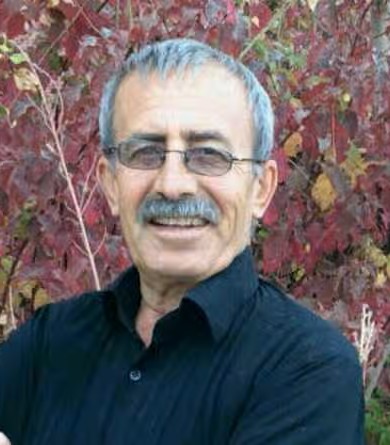
My name is Mahmud Salehi. I was born in 1962 in Saqqez, a city in Iran's Kurdistan Province. I have two sons and one daughter. I became active in labor associations (syndicates) and workers’ organizations at the start of the Revolution. I began my first trade union activity on May 1, 1979, with the Bakers' Syndicate of Saqqez. I am one of the founders of the Coordinating Committee for the Formation of Workers’ Organizations in Tehran, and I also helped establish labor associations in Saqqez, Mariwan, Baneh, Bukan, and Mahabad.
The Bakers’ Syndicate of Saqqez was originally founded in the 1970s but was disbanded by SAVAK. Right after the revolution, we reestablished the syndicate. That same night, when we took control of the SAVAK office and the city of Saqqez, the syndicate was reformed. The syndicate continued its activities until the Islamic Republic attacked Kurdistan, brutally suppressing the region and effectively dismantling it.
Saqqez Bakers’ Association
Following the Islamic Revolution, bakers organized the first International Workers’ Day demonstration in Saqqez. However, once the government took control of the city, they no longer allowed us to hold May Day ceremonies. Because of this, we celebrated the event outside the city, on the hills, in the valleys, and across the plains.
Iran's governing system is capitalist. Capitalism means one person exploits another, and we belonged to the exploited class. When the working class faces exploitation, it must find ways to defend itself—such as ensuring that, instead of working 10, 12, or 15 hours a day, it works within the legal working hours recognized by the International Labour Organization, following the sacrifice of Chicago’s workers on May 1, 1886. These standards should also apply to us, allowing us to benefit from them. We established the Saqqez Bakers’ Association in 1994 because authorities objected to the term "syndicate," claiming it was linked to communists and should not be used. In Iran, only three types of organizations are allowed: professional associations, labor councils, and the Workers’ House. No other organizations are permitted. Therefore, in 1994, we formed the Bakers' Trade Association of Saqqez, of which I was a founding member. Our main activities included addressing working hours and ensuring all bakers had insurance. We also set up literacy classes within the association so illiterate workers could learn to read and write. Other initiatives involved addressing unpaid wages and enforcing salary payments in accordance with the decisions of the Supreme Labor Council.
We successfully registered the Bakers’ Association. However, the Iranian Ministry of Labor has drafted a standard statute, known as the "Model Statute" (Asasnameh-ye Tip), which all professional associations must adopt. Any change to the statute automatically nullifies the association’s registration. Although the statute states that the General Assembly is the highest authority within an association—meaning it has the right to amend the statute—the Ministry of Labor does not permit such changes. Associations must operate strictly within the framework of the ministry's model statute, or their registration will be revoked. In practice, no one is allowed to modify the statute, and everyone is required to use the standard version. Therefore, we had no choice but to operate within those limits while facing ongoing threats, summonses, and arrests. We were repeatedly detained and questioned solely because of the association and how it operated. Officials instructed us on how to act and often arrested us for resisting their commands. We applied for the permit through the Labor Office, which represents the Ministry of Labor in Kurdistan Province. A Ministry representative was present during our first General Assembly. We sent the meeting minutes to the Labor Office, which forwarded them to both the provincial Ministry representative and the main Ministry office in Tehran. However, at times, they made holding assemblies contingent on certain conditions. At times, we were denied permission to convene the General Assembly for an entire year, and on other occasions, decisions made during meetings were rejected by the authorities.
When the association was established, about 10 percent of bakers lacked insurance. Thanks to the trade association’s efforts, mandatory coverage was secured for all of them. Concerning wages, bakers were not actually receiving the salaries set by the Supreme Labor Council. We enforced these payments, including bonuses, annual rewards, and overtime pay. We accomplished all this on behalf of the workers. I remained active in the association until 2011. I left after the Ministry of Intelligence prevented me from running in the elections. Still, the association continued operating until 2022. However, due to economic hardships and an inability to pay rent for office space, the association dissolved two years ago.
Holding May Day Ceremonies
From 1994 to 1996, International Workers’ Day ceremonies took place outside the city. Labor activists gathered in rural areas to celebrate the holiday. After forming the Bakers’ Trade Association in 1996, we decided to hold the ceremonies inside the city again. From that year onward, we organized all commemorations, including Labor Day and International Women’s Day, within Saqqez. However, about a month before each event—whether May Day or Women’s Day—we would be summoned and arrested. The authorities dictated what we could and could not do and which slogans we could or could not use. We were taken to the Ministry of Intelligence and detained until the day after the ceremonies. Until 1994, our events were held indoors in rented halls, but that brought its own problems. For example, they told us not to write "Long live May Day," because they said that phrase belonged to the communists. Instead, we had to write "Happy May Day," which they claimed was their own version. They insisted that we use quotes from Khomeini such as: "I kiss a worker’s hand." They also required that the Friday prayer leader, the city governor, and the Ministry of Labor’s representative speak first during speeches, while we were only to receive a blanket as a prize because "workers had no right to give speeches." We ignored these orders, however, and went ahead with our plans, accepting the consequences. I was arrested and imprisoned many times because of this. I served four to five years in prison solely for participating in May Day events—just for May Day!
Starting in 1994, the Saqqez May Day Organizing Council decided to publicly hold International Workers’ Day in the streets. When we did, security forces attacked us and arrested dozens. Everyone was released that same night except for seven of us. We went on a 13-day hunger strike before being released on bail. Everyone was acquitted except me. I was sentenced to one year in prison and served the full term.
In 2001, we received official permission to hold the May Day ceremony at Kaveh Hall, a sports complex in Saqqez. Despite having a permit, I was the first to be arrested. They prevented me from giving my speech, insisting we had no right to speak even though we had approval. This happened repeatedly over the years.
During Mohammad Khatami’s presidency in the early 2000s, I was arrested again and sentenced to a year in prison. When I appeared before the judge, he told me to write a letter of repentance so I could be released. I replied, "If I wanted to repent, I would have done so while in the custody of the Ministry of Intelligence, thus avoiding appearing before you altogether. I have done nothing for which to repent.” The judge showed me a letter from the president at the time requesting my release, tore it up, and threw it in the trash. The security agencies never respected the law or the permits we obtained. In 2003 and 2004, despite having official authorization to hold May Day ceremonies in Saqqez, I was arrested during the events. Instead of taking me to prison, they drove me to a place called Behnam Dasht, on the road between Marivan and Saqqez. There, plainclothes agents held me until the ceremony was over, and then they released me. The law has never applied to labor activists; security agencies operate beyond it. In Kurdistan, they accuse us of belonging to Komala, a Kurdish leftist party. Outside of Kurdistan, they call us communists.
We established the May Day Organizing Committee in 2004. Before that, we had formed a council to coordinate May Day events. This council decided that the celebration had to be held in the streets. In meetings in Tehran, we adopted a 23-article resolution. All participants were required to follow this resolution in their local May Day ceremonies. Saqqez was one of those cities. Two days before May Day, I met with representatives of the International Labour Organization in Tehran and invited them to Saqqez, but they did not come. We knew we would be arrested and imprisoned, but we were determined to hold the event in the streets. Even before reaching the main square, security forces attacked and beat us. That day, nearly 60 people were arrested. Still, we celebrated International Workers’ Day in the cells of Saqqez Prison. After this event, Iran’s labor movement entered a new phase and began to receive widespread international support. Following this experience, the Coordinating Committee for the Formation of Workers’ Organizations was created to promote unity and solidarity among the labor movement and the working class. The Tehran Bus Workers’ Syndicate, the Haft Tappeh Sugarcane Workers’ Syndicate, and the Free Union of Iranian Workers were established after 2004. The Coordinating Committee and the Follow-up Committee for the Formation of Workers’ Organizations had already been formed by then. Despite constant pressure from security forces, we kept working.
I have been banned from working or being employed anywhere since 2007. Labor-related institutions were explicitly told that I am not allowed to work. The security agencies, specifically the Ministry of Intelligence, ordered this restriction. I worked as a baker in Saqqez for nine years before being dismissed by order of the Intelligence Office. The Dispute Resolution Board and the Arbitration Committee did not issue a ruling. They told me, "We don't dare make a decision—you'll be reinstated, and we'll be fired." I eventually took the case to the Administrative Justice Court, which overturned my dismissal and referred the case to a parallel court in Marivan. When I arrived, the head of the Intelligence Office, Mr. Mohammadi, told me: "Mr. Salehi, honestly, if we rule in your favor, it would be the right thing to do, but we'd be fired, so this ruling must remain blocked." I was formally dismissed. I filed a complaint against Labor Office inspector Mr. Qadimi, but the court refused to hear my case. Around that time, workers proposed forming a consumer cooperative. I became its managing director. Despite repeated threats from the Ministry of Intelligence and security forces not to participate, the workers ignored the warnings and continued their activities.
Collaborating with the Coordinating Committee to Help Establish Workers' Organizations
The Coordinating Committee to Help Form Workers’ Organizations was established in Tehran in 2005. In Iran, only three types of labor organizations are legally allowed to be formed. Beyond these three types, no other organization can be officially registered. According to the law, workers are entitled to hold general assemblies at any time, elect their representatives, and submit the names of elected members to the Ministry of Labor for registration. However, this provision exists only on paper in the Ministry’s statutes and is never honored in practice. For example, we proposed dissolving existing associations and returning their assets to the workers, but the Ministry of Labor strongly opposed this plan. According to the Ministry's bylaws, any remaining funds must be transferred back to the Ministry, not the workers. This issue often disrupts the holding of assemblies.
According to Iranian law, workers have the right to form their own organizations, hold an initial general assembly, elect a board of directors and auditors, and submit their documentation to the Ministry of Labor for registration. However, from the start of forming the Coordinating Committee up to its sixth general assembly, we faced arrests, detentions, threats, and summonses. During the sixth general assembly, two opinions were debated: one supporting continued activities and another favoring official registration. The majority voted to pursue registration. Elections were conducted, and board members and auditors were selected. I was responsible for submitting the registration application to the Ministry of Labor. We submitted the request, but the Ministry never approved it. Officials from the Ministry of Intelligence repeatedly told me: "If you appear on television and speak out against leftist parties, we will register the Coordinating Committee." This revealed their intention to reclassify the committee under Article 10 of the Political Parties Law as if it were a political party. However, we were not a political party. We were a group of labor activists aiming to create independent workers' organizations. Nevertheless, they attacked us several times. We repeatedly informed the Ministry of Labor, the Ministry of Intelligence, and the Judiciary that if our organization was illegal, they should officially declare it and state that participation is a crime. I personally discussed this with the head of the provincial judiciary many times, saying: "If this group is illegal, officially notify us so we can inform our members." To this day, no such declaration has been made.
We founded the Coordinating Committee because the working class was deeply frustrated with the Workers’ House, the Islamic Labor Councils, and the trade associations. These organizations had failed to represent workers’ interests. They claimed to pursue "reconciliation between labor and capital," an inherently impossible goal. Workers across Iran were protesting in various regions.
Since forming organizations in workplaces was banned, a group of labor activists from across Iran—not just Kurdistan—met in Tehran. After several meetings, we established the Coordinating Committee to Help Form Workers’ Organizations. According to Article 4 of the Committee’s bylaws, we started activities to support the creation of independent labor organizations. We engaged in organizing, raising awareness, and outreach. As the committee gained momentum and attracted more members, however, we faced several attacks, and many of us were arrested.
On one occasion, our general assembly in Sanandaj was raided, and about 100 people were detained. During another assembly in Karaj in 2011, we were attacked again, and approximately 80 people were arrested. Legal cases were opened against nearly all committee members, with some resulting in convictions. Security agencies routinely detained our activists throughout the year. In Mahabad, committee members were sentenced to two and a half years in prison, while those in Bukan received three and a half years. They served all their sentences. I was sentenced to nine years in prison in Saqqez, but my sentence was later reduced to one year. In Rasht, Sharifeh Mohammadi, one of our members, was sentenced to death—a ruling that, as of autumn 2022, has been upheld by the Supreme Court.
In Sharifeh Mohammadi’s case, three charges were brought against her: membership in the Kurdistan branch of the Communist Party of Iran (Komala), membership in the Coordinating Committee, and connection with Behzad Sohrabi, a political activist in exile. For example, when Kurdish authorities claimed that I had been arrested for ties with Komala, it was such a common accusation that no one questioned it. They accused me of the same every time I was detained. Over nearly ten years in prison, that false charge was repeatedly used against me. However, Sharifeh Mohammadi had no connection with Komala. Her only link was to us—a group that security agencies considered "known offenders."
All members of the Coordinating Committee were public figures. We did not form the committee in secret to fall under the category of "baghi" or armed rebellion against the Islamic ruler. Baghi applies to secret groups. We had an official charter and a public website. When applying for May Day permits, our members formally submitted requests to the Governor’s Office and the Intelligence Office on behalf of the committee. During our last general assembly, we requested that the Ministry of Intelligence provide us with a venue for the meeting, as clear proof that our activities were not secret.
Regarding the alleged connection with Behzad Sohrabi, he is currently living abroad. However, while he was in Iran, he served as one of the elected representatives of the Coordinating Committee. His name and full identity were officially submitted to the Ministry of Labor as our representative. Therefore, all three charges against Sharifeh Mohammadi are baseless.
Torture and Security Pressure on Labor Activists
During those years, the working class in Iran was making steady progress, and groups abroad aligned with the labor movement offered strong, visible support. However, as the working class advanced, the security pressure on labor activists intensified. Security forces constantly surrounded our homes and monitored our every movement and that of our visitors. Despite the repression, our only demand was the right to form our own independent organizations. Workers were repressed under all administrations. From Mohammad Khatami's presidency to Akbar Hashemi Rafsanjani's, the Ministry of Labor remained detached from the government’s promises of reform, and nothing changed for us. After 1994, however, physical torture essentially gave way to white torture, a form of psychological and sensory torment that is, in many ways, even more painful than physical abuse. While I was imprisoned, I was flogged 60 times a day on my back. Afterward, I would return to my cell, and within a day, the welts would begin to heal. It was painful, but bearable. However, white torture destroys the mind, body, and spirit.
During white torture, your wife, family, and beliefs are insulted. You are forced to live either under blinding lights all night or in total darkness. Sometimes, they deprive you of food. In 2015, the authorities deliberately cut off my blood pressure medication and kept me in solitary confinement for 35 hours. During that time, I lost my kidneys. Since then, I have needed dialysis three times a week at the hospital. These are examples of white torture, methods that destroy your physical and mental health. White torture does not end with detention. It continues in daily life, such as when security forces follow someone who visited your home or when you are shadowed each time you leave the house. These are all forms of psychological torture.
Every year, as May Day approaches, the pressure grows. Some acquaintances have even said, "Mr. Salehi, we truly respect you, but we don’t dare say it aloud or greet you in public." These are also examples of white torture. Whenever I visit an administrative office for paperwork, the staff often tell me they’re afraid to help me.
Impact of Repression on the Family
Of course, restrictions on my activities have negatively affected my family. It's natural that my children don't think exactly as I do. Both of my sons finished university, yet they work as laborers. However, professional associations refuse to insure them because they are "Mahmud Salehi's sons" and are considered "dangerous." Neither of my sons has insurance coverage, not even for a day. One of them, now 34, once told me, "You've ruined my life for 30 years." This reflects the emotional toll my activism has taken, and the Ministry of Intelligence is fully aware of it. According to the laws of the Islamic Republic, my son should have been exempt from military service because I am disabled and unable to work. But because he is my son, they canceled his exemption, forcing him to either go into hiding forever or serve in the military. The discrimination doesn't end there; it follows him to school and university. Wherever he goes, people say, "He's Mahmud Salehi's son," which deeply upsets him. He once said, "Why did I have to be your son? I wish I were the son of Haji Qafur Azadi," referring to a wealthy and well-known man in Saqqez. These examples illustrate how my activism has had a negative impact on my family.
When my son applied for a military exemption because of my disability, he completed all the required medical exams. In the final stage, we met with the head of the local military service office. The colonel looked at me and asked, "Mr. Salehi, do you know me?" I said no. He responded, "But I know you." I replied, "That's not surprising—anyone in Kurdistan would recognize me if you showed them my picture." Then the colonel said, "Your son is exempt, but if you stop your activities, I'll sign his file. Otherwise, I won't." I told him, "These matters are unrelated." He drew a red line across my son’s file. The sergeant who had brought the file was upset and said, "Mr. Salehi, please file an appeal—this man is insane." We did, and the case was sent to another committee. When I arrived, three people were present: Mr. Khami from the Governor’s Office Security Division, Esma'ilino, a City Council member, and a member of the Revolutionary Guards. As soon as I arrived and greeted them, they said, “Get out.” They reopened the file and drew a red line through it once again.
My wife and children are forced to endure this injustice. These are all examples of psychological repression, or white torture, that extend far beyond the individual. In Sanandaj, I once had a legal case that was ruled in my favor. However, when it was transferred to Saqqez for enforcement, the judgment was annulled simply because I am Mahmud Salehi and I have been arrested 25 times. The Ministry of Intelligence even recorded an hour and a half of video surveillance inside the shop of a friend I used to visit. His family undoubtedly suffers from that intrusion.
During the Jina (Mahsa) Amini protests and the Women, Life, Freedom movement, I was at the Aychi cemetery. Later, about 20 motorcyclists attacked our home, smashing all the doors and windows. When I went to the Intelligence Office to ask why, they said, "You were standing in Aychi." I replied, "All I did was stand there. What did I do wrong?" They responded, "Just standing there means you legitimized the protests." Those twenty motorcyclists destroyed our house just because I had stood silently in the cemetery. These events have deeply affected my family—my children, my grandchild, my daughter, and my daughter-in-law. They are constantly living in fear.
Arbitrary Arrests and Summonses
In Iran, the idea of a lawful arrest is not practiced. According to the Constitution and the Criminal Procedure Code, anyone taken into custody must be detained with a judicial warrant. However, in reality, no such warrants are ever produced, and if one is, it is usually fake. I have been arrested 25 or 26 times, and I have never seen an order authorizing my arrest. Under the same laws, since my workplace and home are known, the judiciary should arrest me, not security forces. The judiciary should issue an official summons for me to appear voluntarily. But that has never happened. They have never had a warrant.
Regarding the agencies responsible for these arrests, there is no clearly defined authority in Iran for making arrests. Those who detain people are almost always in plain clothes to hide their institutional affiliation. Consequently, if something is stolen from my home during a raid, I have no official body to which I can file a complaint. In most cases, the detaining authority is deliberately kept hidden. Security agencies may even bring in an ordinary police sergeant from the street, dress him in civilian clothes, and send him to participate in the raid. For example, there was a man in our area named Ala’eddin Kalami who was a sergeant in another agency and formerly headed the Anti-Smuggling Unit in Saqqez. Yet, every time the Ministry of Intelligence raided my home, he was the first to enter, leading the operation. This shows that no specific, identifiable agency is responsible for the arrests. According to the law, when officials enter a person’s home by order of the judiciary, they must create two copies of an inventory list detailing everything seized, with one given to the accused. However, in practice, none of this procedure is followed.
Trade Union Activity in Iran
Independent trade union activity is impossible in Iran unless one acts as a government spokesperson. For instance, the Construction Workers’ and Masons’ Trade Associations do not genuinely represent workers; instead, they serve as representatives of the Social Security Organization. During their ceremonies, the governor delivers the speeches. However, International Workers’ Day has nothing to do with governors, Friday prayer leaders, or local clerics. This demonstrates that independent events cannot be organized, nor can genuine trade union activity be carried out, unless one maintains connections with such officials.
On paper, Iran’s Labor Law appears more progressive than those of many neighboring countries, such as Iraq, Afghanistan, Pakistan, and Turkey. According to the law, a worker cannot be fired unless they commit a confirmed violation, as determined by a representative of the workers. However, thousands of workers are fired every day. The law exists, but it is ignored, and those responsible for enforcing it simply do not care. During one of my arrests, they took off my shirt. I protested, saying, "This is illegal." One of the officers replied, "Go complain to the International Labour Organization or the United Nations—I'm not giving you a shirt to wear!" This is how the law is "enforced" in Iran.
In my view, workers should not need permits to hold gatherings. On May Day, the streets should belong to workers. It is in the streets that we show our class power to the regime and the capitalist system. Article 63 of the Labor Law clearly designates May 1 as an official public holiday. However, to weaken the importance of this day, the government has turned it into a "Workers' Week," ensuring that workplaces stay open and that capitalist profits are not disrupted. I hope that someday, workers—not only in Kurdistan and Iran, but around the world—will be able to celebrate May Day freely and proudly.