
Testimony of Esma'il Abdi
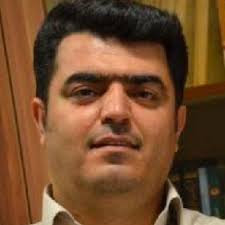
My name is Esma'il Abdi, and I am a former mathematics teacher with the Ministry of Education. I began my teaching career in 1994 in Islamshahr, later teaching in Tehran and Shahriar. After more than twenty years of service, I was dismissed from the Ministry of Education on October 5, 2024, by order of the Preliminary Administrative Violations Board.
Repression in the Early Years of the Islamic Revolution and the Coordinating Council's Formation
The Coordinating Council consisted of several associations and unions. Starting in 1999, teachers gradually gained the ability to form associations. Some of these associations received licenses from the Ministry of Interior and local authorities, such as the governor’s office, in their respective regions. In 2002, a coalition formed in Shiraz, bringing these associations together under the Coordinating Council.
The "Coordinating Council of Iranian Teachers' Trade Associations" was officially announced in 2006. However, it never received an independent license from the Ministry of Interior as a distinct entity. However, this does not mean that the Council was illegal because higher-level laws, most importantly Article 26 of the Constitution, permit associations to form voluntarily, independently, and free from state or political party control. The Coordinating Council was created within this framework. In fact, the history of teacher trade unions in Iran dates back decades before 1999. Before the revolution, the Mehrgan Club was one of the most influential teachers' associations. In 1961, the club organized the largest nationwide teachers' protest up to that time against the "Salary Classification Bill." The protest culminated in the death of Abolhassan Khan’ali, a teacher who was killed by police gunfire. Ultimately, the protest brought down the government of Prime Minister Ja’far Sharif Emami. Ali Amini was then appointed to form a new cabinet, but the teachers remained dissatisfied until Mohammad Derakhshesh, secretary of the Teachers’ Union, was appointed Minister of Education. Therefore, the roots of our trade activism stretch back long before recent decades—we did not invent this idea.
In the early years following the Revolution, repression was widespread. Many people were executed, and large numbers of teachers were purged during the Cultural Revolution. In the early 1980s, members of the Bahá’í community were expelled from educational institutions and stripped of their right to teach and study. In 1999, the Reformist government's relative political openness created a space in which teachers' associations could apply for and receive permits from the Ministry of Interior. In 2002, five licensed associations drafted a charter and established the Coordinating Council to collectively pursue their demands while preserving each association's independence. The Council adopted bylaws that were revised over time, most recently in Bojnourd (2019) and Isfahan. Initially, the council's structure was regional, with ten provinces responsible for coordinating with neighboring areas. These roles were not executive, but rather designed to facilitate communication. The Secretariat was always based in Tehran, while the rotating chairmanship passed from province to province. The first province was Isfahan, followed by Hamadan in 2014, North Khorasan in 2019, Bojnourd, Islamshahr, and finally, Tehran, which assumed responsibility for the Secretariat in its last online session. To reduce sensitivity, the Council later decided not to use the title "Chairman" at all, opting instead for terms that would attract less official scrutiny. Opinions differed on whether such a council required official licensing. Some argued that, according to the law, notifying the Ministry of Interior was sufficient and that no additional permit was required for federations or coalitions of associations. This reflected a gradual transformation in teachers’ collective consciousness regarding their right to organize—a transformation forged through years of resistance, imprisonment, exile, and the pursuit of trade union demands.
Contrary to the image the state projects of teachers as faithful servants of the regime and the Supreme Leader who lead prayers, organize ideological camps, dutifully vote, and urge others to do the same, the reality is quite different. Through their activism, teachers revealed another face: one that stood in the streets, protesting and demanding rights from the authorities. For many years, they endured prison and exile without flinching. In doing so, they showed students that the official image of teachers was false. The true face of the teacher emerged in the arena of protest and struggle. Hand in hand with workers and student groups, teachers and students became one of the socially progressive forces at the forefront of demonstrations.
Union Activities and the Onset of Arrests
I first became involved in teachers’ trade union activities during the organized protests of the early 2000s, which occurred during the final years of President Khatami’s government and the beginning of President Ahmadinejad’s administration. At that time, certain cabinet resolutions were not being implemented, most notably the "Unified Salary System Bill," which the government was required to submit to Parliament but refused to do so. In response, the Coordinating Council of Iranian Teachers' Trade Associations called on teachers to gather in front of Parliament to protest.
I first participated directly in such demonstrations during the widespread protests that began in February 2007 and continued until March 14 of that year. The Coordinating Council organized these protests, which were met with heavy security force crackdowns. On March 14, I was arrested by security forces. This marked the first official confrontation between me and the Teachers' Trade Association. Another meeting of the Coordinating Council was suppressed in September 2007, and I was arrested for the second time. That time, 19 association representatives were detained in Tehran. Then, in January 2009, security police arrested several association representatives during a meeting with the parliamentary minority faction. Following the events of 2009—a reference to the mass protests that followed the disputed presidential election—repression against trade activists intensified. In 2010, following the publication of a statement in Yazd, several teachers were arrested, including myself. This time, the Ministry of Intelligence acted as both plaintiff and enforcement arm of the judicial authority. Ultimately, I was sentenced to ten years in prison, though the sentence was suspended for five years.
Secretary of the Teachers’ Trade Association and a New Wave of Repression
In 2013, the board members elected me Secretary of the Teachers’ Trade Association. During this period, we met with the managers of the Teachers’ Reserve Fund. Upon review, we discovered opaque financial practices that revealed a systematic network designed to plunder the fund’s resources. Subsequently, the Coordinating Council convened a meeting with 19 other associations, and we presented our findings to teachers. In 2014, teachers' protests began to grow, initially spontaneously. In response to the Ministry of Education's structural dysfunction and to pursue educators' legal demands, the Teachers’ Trade Association of Iran–Tehran decided to organize a peaceful gathering. In coordination with other branches of the Teachers’ Trade Association of Iran, we scheduled the gathering for March 1, 2015, in front of the Parliament building in Tehran. In other cities, we scheduled the gathering in front of the local departments of the Ministry of Education. Nearly forty days in advance, we submitted our request to the Ministry of Interior. According to the law, the Ministry of Interior is required to respond to such requests with either approval or denial. Yet, until the day before the scheduled gathering, we received no reply.
A meeting of the Association’s board was held on February 28. Some members expressed concern and suggested canceling the gathering, but the majority opposed this idea. During that same period, I, as Secretary of the Association, was first summoned by the Ministry of Intelligence’s Follow-Up Office and later by the IRGC’s Sarallah Headquarters. During these sessions, they demanded that we cancel the gathering. I explained that we had submitted the request forty days earlier and, in the absence of a response, we had interpreted their silence as consent to proceed. I also explained that many teachers had pledged to attend and that, if the board members of the Teachers’ Trade Association failed to be present as organizers, uncontrolled incidents might occur and security problems could escalate. When their threats proved ineffective, they stated that March 1 would be a "red line" and cautioned us to prevent anyone from shouting "subversive slogans."
The March 1, 2015, gathering was held in cities and provinces across the country and was a great success. Even associations that were not branches of the Tehran Association participated at that time. They recognized that this peaceful method of protest was the correct approach. Then, on May 7, 2015, the Coordinating Council of Iranian Teachers’ Trade Associations organized another nationwide gathering. As the umbrella organization of teachers' associations across the country, the Council held authority over the Tehran Association. Unlike the March 1 gathering, for which an official request had been filed with the Ministry of Interior, the Council chose not to submit any correspondence because it was not recognized by the Ministry. Instead, the Council issued a public announcement to inform teachers and oversight institutions that a protest would take place on a specified date. On the same day, member associations held coordinated gatherings nationwide. To my knowledge, no association formally corresponded with provincial or district authorities.
During my tenure as secretary of the Tehran Teachers' Trade Association, we submitted two formal requests to legal authorities: one for the March 1 gathering and another for renewal of the association's license. Both went unanswered. The broader structural problem was the systematic blockage of legal avenues for holding general assemblies. The Ministry of Interior either remained silent or failed to respond to requests for license renewals or authorization of general assemblies. This situation changed somewhat under President Hassan Rouhani’s administration when officials announced that they no longer objected to holding general assemblies of professional associations. Following this announcement, nearly 16 associations were able to hold their assemblies after years of obstruction. In Tehran Province, for instance, no general assembly had been held for over a decade due to extensive pressure imposed during the ninth and tenth governments. Even the Coordinating Council’s meetings had been suppressed during that period. While I was on furlough from prison in 2016, I attended the general assembly of the Tehran Teachers’ Trade Association and was elected to the board once again by my peers. Remarkably, most of those elected at that assembly had histories of arrest and long-standing trade union activism.
Establishing Branches of the Teachers’ Trade Association in Other Cities
In 2016, a new development occurred in the process of forming teachers’ associations when the government facilitated general assemblies. However, in 2017, despite earlier promises, the authorities refused to renew the Tehran Teachers’ Trade Association's license and denied permission for the association to hold its own general assembly. The Tehran Teachers’ Trade Association bylaws contained a clause that allowed the association to establish branches in areas lacking independent teachers’ organizations. During my tenure as secretary, we used this legal provision to expand unionization across the country. We established branches of the Tehran Association in cities such as Borujerd, Shahroud, Pakdasht, Qods, Robat Karim, and Zarindasht (Fars Province), among other areas where no independent association existed. All of these initiatives were carried out through local general assemblies with the active participation of teachers in those regions.
However, after 2017, under President Hassan Rouhani’s second administration, the Tehran Association's license was not renewed. Consequently, the association's nationwide activities halted, and the establishment of new branches outside of Tehran Province became illegal. During this period, the Ministry of Interior proposed that teachers' organizations in each province independently apply to form associations rather than operating as branches under Tehran's oversight.
Although 15 to 16 provincial general assemblies were held successfully, security bodies—including the Police Security Department, the Ministry of Intelligence, and the IRGC—intervened to prevent many others. The government initially raised expectations by making promises, but ultimately blocked the expansion of the Tehran Association. Currently (2024), no new branches of the Tehran Teachers' Trade Association are permitted. Such expansion will only be possible if a general assembly votes to restore the previous bylaws. Under the original bylaws, we had the authority to operate in other cities; however, the current bylaws strictly limit us to Tehran Province.
At that time, some provinces and cities formed their own associations independently. Provinces such as Hamedan, Khuzestan, Bushehr, Gilan, Khorasan, and Yazd each established their own associations. Nearly 40 formal organizations have operated under the umbrella of the Coordinating Council, some as branches of the Tehran Association and others formed independently and officially authorized by their local governor’s offices. These organizations hold their own general assemblies.
Tehran was exceptional in that it held the authority to establish branches nationwide, particularly in areas without independent associations, based on a clause in its bylaws. However, this authority was revoked during Rouhani’s presidency. In Islamshahr, for instance, there used to be an active association; however, due to interference by security agencies, its general assembly process was halted. Before I joined the Tehran Association, my colleagues in Islamshahr had already started this initiative. I recall visiting the governor’s office with several friends where we were asked to submit documents. We provided all the required materials, and it was agreed that the general assembly would be held under the governor’s supervision. However, despite the presence of three to four thousand active teachers in Islamshahr who sought a general assembly and representation in the Coordinating Council, we were rejected outright by the security services. Despite our full documentation and adherence to legal procedures, the assembly was blocked. Later, during interrogations and arrests, officials told us, “You are the very people who tried to establish an illegal association in Islamshahr, and we did not allow it.” We responded: "We followed the entire legal process. We relied on bylaws drafted by the Ministry of Interior, submitted formal requests, and provided all necessary documentation. What illegal act did we commit?" However, they claimed that teachers had no right to unionize and that any teachers’ association was inherently “illegal.”
Even now, one of the main charges brought against us is "membership in the illegal Teachers' Association." For example, the indictment issued against me in Branch 15 of the Revolutionary Court, presided over by Judge Salavati, included the charge of “assembly and collusion against national security through serving as Secretary of the illegal Teachers’ Association of Iran–Tehran.” Another charge was "organizing unlawful teachers' protests." These accusations are purely security-oriented phrases inserted into the indictment by directive. A proper indictment should be grounded in legal provisions. Unfortunately, however, such texts read more like essays authored by security agencies and placed on the judge’s desk for signature and stamping. Judges of this kind—of whom there are unfortunately many—have undermined the judiciary’s credibility. Judge Salavati is at the forefront of this practice, alongside others who have pursued this same approach for years.
Participation in the Teachers' World Congress
In 2015, I was elected as the representative of the Coordinated Council of Iranian Teachers' Trade Unions to attend the World Teachers' Congress. The Seventh Congress of Education International was held in Canada. The Education International (EI) is a global federation representing over 400 education unions worldwide, encompassing nearly 30 million teachers across more than 174 countries.
The Coordinated Council of Iranian Teachers’ Trade Unions (CCIT) is an official member of this international body. However, when I attempted to leave the country, my passport was confiscated at the airport, and I was told to follow up at the Judicial Palace. I was then referred to Branch Two of the Moqaddas Prosecutor’s Office, located at Evin Prison, to determine the reason for my travel ban. In reality, the security authorities intended to arrest me. They believed that I had participated in the 2014 and 2015 protests, which they thought had been primarily led by the Tehran Teachers’ Trade Association. At the prosecutor’s office in Evin, the investigator informed me that I had to be formally charged. He put two case files in front of me and asked if I accepted the charges. I made it absolutely clear that I did not, and I submitted a written objection. Nevertheless, he announced that an arrest warrant had been issued and that I could not leave.
Meanwhile, nearly 80 teachers from across the country—representing 40 different provinces—gathered in protest near Evin Prison under the Yadegar Bridge. They wore placards on their chests reading: "We are all Abdi." This collective protest prevented the prosecutor from transferring me to the IRGC’s security detention facility until 4:00 p.m. Eventually, they promised my release, and the teachers dispersed after issuing a resolution. However, immediately afterward, I was transferred to Ward 2-A of the IRGC’s security unit.
During interrogation, one interrogator bluntly told me: "We are going to shut down the Teachers' Trade Association and the Coordinating Council. From now on, your council meetings will have to be held inside Evin Prison.” These words were the key signal of the authorities’ intent to fabricate cases against teachers. From that point on, repression intensified—ranging from the dismissal of many teachers to the use of Administrative Disciplinary Boards as tools of suppression.
Security Agencies’ Interference and a New Wave of Activities
My father passed away last year (2023). I requested temporary leave from prison to attend the funeral. After posting bail with the Revolutionary Court, I was granted permission to leave. Even then, the judge’s office staff and the security agents present told the guarantor, "Mr. Abdi is not reliable, and you may lose your bail."
I recall another incident from 2016. At that time, a retired teacher offered to post bail so that I could be released on medical leave after a hunger strike. Judge Zargari of Branch 36 (now passed away) told the teacher through his assistant, “Mr. Abdi is not reliable. Are you sure about this?" The woman, retired for fifteen years, replied firmly: "I would sacrifice the deed to my house for a single strand of Mr. Abdi’s hair, and for the teachers who struggle. I am even ready to burn this deed if necessary. Just do your job.” The judge then placed two thick case files on the table and said, "These are Abdi's cases." The retired teacher asked, "Have you read them all?" He answered, "Yes, I have." She challenged him. "Then what is written on page 14 of Volume Two?" The judge dismissed her, saying, "You are all the same." To me, this incident exemplifies the extent to which security agencies interfere, even in the bail process. They deliberately sought to undermine public trust in union activists by suggesting that posting bail for us would result in confiscation. From the beginning, security agencies tried to create division and discord within the Coordinated Council. Unfortunately, they succeeded in some cases. In certain provinces, such as Khorasan, Basij members and other "revolutionary forces" loyal to Islamic values and the Supreme Leader intervened in general assemblies, taking control from progressive members. These interventions caused some unions to withdraw from the Council. Consequently, the number of active member unions in the Coordinated Council declined from nearly 40 to approximately 25. Some organizations that had previously joined the Council later withdrew, while others stopped holding general assemblies or gradually ceased their activities altogether due to a lack of motivation or legal obstacles. For example, provinces such as Ardabil and Chaharmahal and Bakhtiari had strong and active members, but continued activity became impossible over time. In some areas, internal disagreements or legal loopholes further hindered organizational work. Nevertheless, the Coordinated Council has attempted to address these challenges by adding new provisions to its structure. According to these measures, if a union in a province or city expresses interest in joining, the Secretariat and the Coordinated Council can facilitate its membership by vetting it, reviewing its record of activities, and evaluating its participation in assemblies. If the union can hold a general assembly independently, the path to membership becomes smoother. Several dynamic and active unions have recently joined the Council, and their presence has been invaluable. For instance, the unions in Harsin and Eslamabad-e Gharb have organized successful protests and issued impactful statements. These organizations are admirable examples of the new wave of union activity within the Coordinated Council framework.
Repression for Almost Two Decades
The Coordinated Council of Iranian Teachers’ Trade Unions was not directly registered under the Ministry of Interior. This gave the council a degree of independence because it did not require the ministry’s annual approval to hold general assemblies. However, this independence never amounted to true freedom. In practice, we faced relentless repression. Starting in 2006, the authorities effectively banned the council from holding meetings. Whenever a gathering or assembly was planned in any city, it was immediately met with a harsh security response. In 2008, we attempted to circumvent this by arranging a visit to the parliamentary minority caucus, planning to hold our meeting on the return trip. However, before we could reach the designated place, we were arrested. In another case, in Hamedan, we organized a meeting with extreme caution. But as soon as we arrived, security forces were waiting outside the door. With sirens blaring, they told us, "You have a few hours. After that, we will escort you straight to the bus terminal." Their message was clear: once we left, they would relax.
From 2006 to 2013, the Council was unable to hold any official or serious assemblies. We finally broke through this deadlock in 2013 in Tehran, when we held a two-day general assembly complete with recordings and documentation. This gathering signaled the end of the seven- to eight-year blockade. A few more assemblies were held afterward, but many were overshadowed by threats of violence. In 2017, nearly forty unions were invited to Tehran. However, as soon as the members arrived at the Elm-o San’at metro station, security police were waiting and began making arrests immediately. Many were taken straight to detention centers. Similar conditions have persisted in subsequent years. Faced with these pressures, we decided to hold virtual meetings and assemblies to ensure our members' safety, maintain accountability, and continue collective decision-making. Online platforms, while not perfect, helped fill the gap left by the impossibility of physical gatherings.
Council members were under such intense surveillance that any plan for a meeting or protest was quickly discovered and disrupted. I recall many stories from that time. For instance, on September 17, 2007, colleagues from Tabriz and Kurdistan were coming to meet with us. We were waiting at the Elm-o San'at metro station when a group of plainclothes agents approached us and asked, "Why are you late? We’ve been waiting for you for a long time!" We responded, "Who are you? We don’t even know you.” At that moment, they pulled out handcuffs, arrested us, and took us away. This demonstrated the extent of the surveillance. They were so well-prepared that gatherings were blocked before they could begin, and if a meeting did take place, it was disrupted before any decisions could be made. Until 2013, Tehran was the only city where we managed to hold a general assembly of the council. Security interference extended everywhere, even into people's homes and schools. For union activists, no space was safe from oversight or pressure.
From 2011 onward, some colleagues tried to hold assemblies through alternative means. For new local unions, a working group inside the Council itself handled the membership process. This streamlined the process, which previously required in-person visits to the Ministry of the Interior. Instead, a simple request was sufficient, and formal permits were not required. We simplified the process on purpose because it was fundamentally unjust to deny teachers the right to unionize. One of the teachers’ movement's greatest achievements compared to other groups has been its determination to find creative methods of survival. Today, despite the real risks of physical gatherings, virtual platforms have enabled working groups and meetings to continue effectively. Of course, unions still need occasional face-to-face meetings for direct dialogue. However, when authorities deny this, we must use alternatives. Despite all this pressure, the Coordinated Council remains active. Renewing leadership and bringing in new members from the second and third ranks of teachers has been critical. Whenever a vacancy emerges, the organization does not crumble. Instead, this continuity has helped maintain organizational discipline, sustain demands, and keep protests alive.
Removing Barriers to Permits
Until around 2006, requests to hold gatherings were submitted in the form of letters addressed to the Ministry of the Interior. However, as repression intensified and security case-building became systematic, it became clear that the purpose was not to adhere to legal procedures, but rather to prevent unions from forming. For this reason, the decision-making process shifted. The Coordinating Council began making decisions independently. When the Council's 25 member unions debated whether to hold a protest, sit-in, or strike, those who voted in favor were obligated to carry out the decision, even if they had initially opposed it. In this way, the Council functioned democratically; once a decision was made, all members were responsible for carrying it out. The Secretariat issued notices, and each union contributed to the best of its ability. Over time, seeking permits from the Ministry of Interior was abandoned because experience had shown that such procedures were not transparent or reliable but rather tools for obstructing and eliminating unions.
On March 1, 2015, I was questioned simultaneously by the Security Police, the Sarallah Headquarters of the IRGC, and the Ministry of Intelligence. I was summoned to both the Ministry’s Follow-Up Office and the Sarallah Office, where tensions escalated. As Secretary of the Teachers’ Association, they tried to pressure me to publicly announce my opposition to the planned gathering, hoping the rest of the board would abandon it. When I refused, they threatened me, warning that no “subversive slogans” should be voiced.
Another incident took place on July 22, 2015. At that time, I was in solitary confinement at the Sarallah facility, experiencing severe psychological pressure. On July 18, my interrogator told me: "There will be no interrogation today. We just have news: Your family will visit tomorrow because July 24 is your birthday." They promised the meeting would be in a visiting room with sofas and amenities to boost my spirits. However, on July 24, when my wife, Monireh, arrived with our children, my mother, and one of my brothers, they would not allow my brother to enter. They claimed that he looked too much like me and could be "swapped."
During the visit, Monireh whispered in my ear, "There is a gathering tomorrow (July 31)." "There is a gathering tomorrow, July 31." On that same day, the interrogator tried to use my family to pressure union members into canceling the gathering, but failed. Afterward, the security services began calling those who planned to travel to Tehran. They told each person a different lie. To religious colleagues, they said I was a Baha'i. To anti-Western individuals, they claimed I was connected to the CIA or the Mojahedin. The aim was to discourage attendance by spreading labels and disinformation. Despite these efforts, teachers traveled to Tehran. The gathering was planned for July 31 in front of Parliament. Buses were stationed along the routes to arrest participants. On that day, Hashem Khastaar, a board member of the Mashhad Teachers' Association, was arrested. Teachers had come from Mashhad, North Khorasan, Hamedan, and other cities. The protest was not solely about me. One of its purposes was to oppose my unlawful detention since the nationwide protests of March and May 2015. Yet, the authorities focused on arresting me alone. Teachers expressed outrage, saying: "In addition to our grievances and demands, you have arrested one of our representatives. Of course we must protest." Security forces attempted to deter participation by making phone calls and sending text messages and threats. For example, some teachers from Karaj were turned back mid-route, but the authorities could not stop everyone. Between 160 and 200 people were arrested that day, and many were subjected to preliminary interrogations. Due to their large number, however, most were released the same night.
In Defense of Others' Pain
These are not mythical stories. Many people can testify to these events. For example, one of our union members, Rasoul Bodaghi, served nearly nine years in prison. Mr. Mahmoud Beheshti Langroodi also spent several years behind bars. Seyed Mahmoud Bagheri and Mohammad Habibi were arrested multiple times. Mohammad-Taqi Fallahi, Ali-Akbar Baghani, and Jafar Ebrahimi were detained in Tehran. Aziz Ghasemzadeh, from Gilan, was subjected to years of security harassment. Even in prison, his prostate condition worsened into cancer due to obstruction of his medical transfers, and he is now undergoing radiotherapy. Hashem Khastaar was arrested in Mashhad. The number of teachers who have been detained and imprisoned is very large, and the names mentioned here are only a few examples. All of those named were members and activists of teachers’ trade associations.
In some cases, associations requested permission to hold a general assembly at a specified venue. The governor’s office and provincial authorities raised no objection, saying, "No problem, go ahead." However, on the day of the event, when people arrived, the doors were locked, and they were denied entry.
In one particularly shocking case, we invited 40 associations to Tehran for a two-day gathering. Initially, we reserved the Enghelab Club, paid the deposit, and arranged everything legally and transparently. However, when we arrived that morning, the club’s security staff said they had been instructed not to host us. Anticipating such obstacles, we had prepared an alternative venue, so we relocated and held the assembly there. This time, the security forces did not intervene, and the assembly continued for two days. Perhaps they had decided against confrontation, or maybe something different had happened behind the scenes.
However, in many instances, security agencies intervened directly. For instance, they would call influential or board members and warn them that they would be arrested if they assembled on a certain date. They took complete control of the intended venue and prevented the event from taking place. They used a range of methods. In one case, the Ministry of Interior filed a complaint with the judiciary against the Tehran Teachers’ Trade Association, demanding its dissolution as an "illegal entity." Essentially, the same authority that had issued the license now sought to shut us down. Ultimately, however, the judge ruled in our favor. However, this did not mean full support. Rather, the ruling stated that the arguments presented for dissolving a trade association were insufficient. The complaint was filed in the early 2010s. The judge of Branch 123 of the Tehran Civil Court made it clear that the reasons cited for illegality were unconvincing and could not justify dissolution. According to the judge, the dissolution of a trade association rests solely with its general assembly.
Unlawful Judicial Processes and Teachers' Dismissals
The behavior of state institutions has taken many forms. Sometimes it involves direct threats, while at other times, security agencies pressure board members not to hold assemblies. Other times, officials simply withhold responses, telling us in person that they will "inform us later." The common practice is to leave no written trace so that nothing can be cited as evidence later.
Security forces operate in such a way that no document remains—nothing that could prove a rejection or lack of response. Even in Revolutionary Court proceedings, they deliberately refuse to provide official notices. When attorneys request written summonses, they are told that they can only copy the text by hand. Therefore, lawyers are forced to manually transcribe what they are shown. This practice is a clear example of the unlawful procedures entrenched in the Islamic Republic. The violations begin from the moment of arrest. In 2010, for instance, I was arrested inside the Islamshahr Department of Education, an act that was both unlawful and an insult to the institution's dignity. Rasoul Bodaghi was also arrested inside a Department of Education building. These types of practices by state authorities have been repeated in various forms.
The Ministry of Education also issues dismissals on the basis of judicial rulings. For example, Judge Salavati handed down a six-year sentence, claiming that I had "organized illegal nationwide teachers' protests." The Ministry's Administrative Violations Board cited the same allegations in its report. The first charge was "calling for strikes, sit-ins, and participation in illegal protests." The second charge was "leading illegal nationwide teachers' protests." Instead of fairly reviewing misconduct, an internal body issued judgments harsher than those of security agencies.
The Ministry of Education in Tehran dismissed four of the most active union members: Rasul Bodaghi, Jafar Ebrahimi, Mohammad Habibi, and Esma'il Abdi. Even individuals such as Mohammad Darkash, who were neither board members nor particularly active, were expelled. Aziz Qasemzadeh, from Gilan, was dismissed after facing 25 charges that were closer to satire than serious accusations. One charge, for example, was "reciting Hafez’s poetry with deviant themes."
In other cases, women who had joined teachers' unions were dismissed as well. Among them were Ms. Somayeh Akhtarshomar from Kurdistan and Ms. Anami from Anzali. Other female activists, including Ms. Mojgan Baqeri from Shiraz and Ms. Nazeranpur from Tehran, received prison sentences. Some were subjected to security case-building, some were imprisoned, some were exiled, and some faced salary deductions. Ms. Siahpur received a prison sentence and was dismissed from the Ministry of Education, as was Ms. Shiva Amelirad. There are many such examples.
In many cases, dismissals occurred without a judicial order, based solely on the internal decisions of the Ministry of Education's boards. For instance, although Ali Haji was acquitted in court, the Violations Board disregarded the verdict and sentenced him to six months' suspension. They announced that his salary would be cut and that he would be barred from service for six months for participating in union protests.
The Ministry’s Administrative Violations Board acts as a security arm that represses the education system, while the Security Office (Herasat) acts as an intelligence apparatus. The process typically begins with warnings, threats, or promises that "nothing will be entered into the personnel file." Later, the alleged violations are formally recorded, gradually pushing the individual toward dismissal from the ministry.
Dismissal on World Teachers’ Day
My dismissal was issued in a deliberately humiliating manner. The termination order was handed down on World Teachers’ Day, October 5, 2024. While this day is celebrated globally to honor teachers, the authorities announced my dismissal from the Ministry of Education on that day as an insulting act. This illustrates a deep structural pathology—a kind of administrative sadism and a desire to humiliate and cause harm within decision-making circles. Their message was clear: on the day the world honors teachers, they would expel us.
Earlier, during my union activities, there had been an attempt to exile me to Famenin, a town in Hamadan Province. However, after some time, I was contacted and informed that the Violations Board had reversed its decision. Apparently, the defense I presented during the hearing played a role in this reversal, and the exile ultimately did not take place.
Many other teachers, however, were exiled. Mr. Loqman Afzali, from Kurdistan Province, had to drive once a week to Ardabil—a dangerous route—where he was forced to stay for several days to teach before returning home. Others, such as Nabiollah Bastan Farsani, Eskandar Lotfi, Peyman Nodinian, and several others, were also subjected to exile orders.
In 2010, after releasing a statement, all members of the Teachers’ Association board in Yazd came under severe security pressure and threats. They were told that if they continued their activities, they would be permanently sidelined. Board members in Kurdistan Province also collectively received disciplinary orders. In Khuzestan Province, four union activists received a combined total of 24 years in prison—six years each. In Fars Province, especially in Shiraz, a large number of security sentences were issued. In Kurdistan, Gilan, Hamadan, and other provinces, the level of pressure depended on the degree of union activity present. In Bushehr, Mr. Mohsen Omrani was imprisoned and pressured into early retirement. In Isfahan Province, Mr. Abtahi in Khomeinishahr was first forced into home confinement and later into early retirement. He resisted for a long time until officials came to his home and extracted his signature. Hashem Khastar spent many years in Vakilabad Prison in Mashhad. Others, including Javad La'l Mohammadi, Mohammad Hossein Sepehri, and Abbas Vahedi, as well as numerous union activists, were also subjected to similar pressures.
The reality is that the number of those targeted far exceeds what any limited list can record. Unfortunately, due to security threats, many of our colleagues refuse to have their names revealed. This may be for family reasons or other personal considerations. Yet, even among those whose names are known, the number is strikingly large.