Testimony of Nushin Keshavarznia
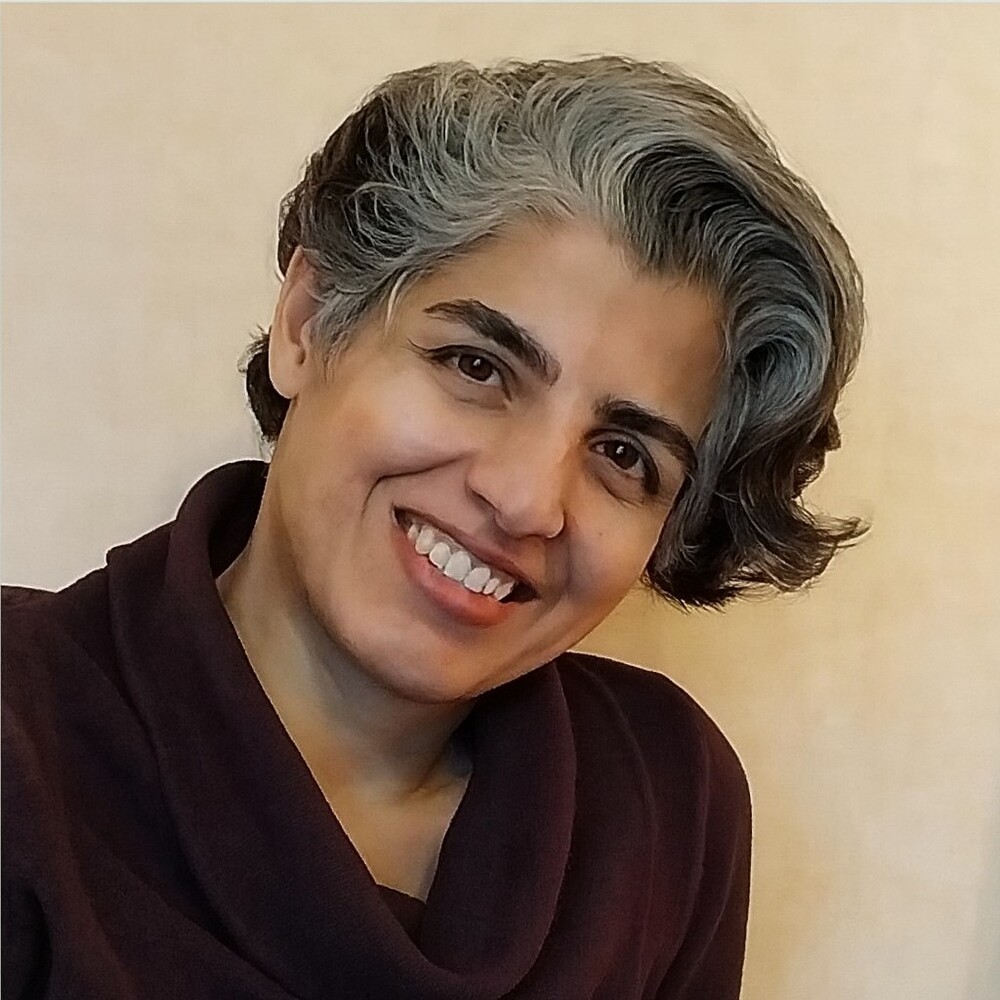
My name is Nushin Keshavarznia. I earned a master’s degree in Women’s Studies from Allameh Tabataba’i University in 2002. Our class was the first to be officially admitted to the program. Previously, the university had only run a pilot program, but with our group, Women’s Studies became a formal field of study.
Even before choosing this major, I was naturally aware of women’s issues, as any woman living in Iran would be. I witnessed discrimination and inequality within families and throughout society. Studying women's studies provided me with a deeper perspective, stronger motivation, and a more acute awareness of gender issues. Before that, I had studied sociology, and during those years, I began identifying more consciously as a woman. I also realized that problems were rooted in social norms around women’s roles. Entering the field of gender studies in 2002 marked the beginning of my civil activism for women’s rights.
The Reformist period that began in 1997 with the presidency of Mohammad Khatami created new opportunities for women's activities. Although women’s circles and initiatives already existed, the Reformist era allowed them more space to organize. Women could create their own groups, gather together, and hold events for International Women’s Day on March 8. They could also openly discuss their concerns. By 2002, when I joined the Women's Studies program, several NGOs had obtained licenses to operate. What had begun as small, informal gatherings of friends had grown into formal associations with official recognition.
Activism at the Women's Cultural Center
I joined the Women’s Cultural Center in 2002. I first met members of this non-governmental organization (NGO) through university circles, and thanks to my field of study, I was able to connect with them. At that time, our group consisted of eight to ten people, most of whom were already engaged in professions related to women’s issues. One was a journalist, one worked in the Education Ministry, and another worked in the Office of Women’s Participation in the government. Many were in their thirties, forties, or fifties and were continuing their studies alongside their careers. Only one other member and I were in our twenties and still full-time students.
Back then, even those working in state institutions often had a critical outlook. Among them were well-known figures: Shahla Sherkat, my classmate and the long-time editor of Zanan magazine, who was active in intellectual and religious reformist circles; Parvin Ardalan, another classmate and a journalist, who was one of the founders of the Women’s Cultural Center; and Farideh Mashini, who did extensive work in religious intellectual circles and left behind a strong legacy of studies and activism.
Around this time, Nushin Ahmadi Khorasani, Parvin Ardalan, Firouzeh Mohajer, and several others founded the center's library. Older activists like Mansureh Shoja'i also participated. They belonged to the generation that had lived through the closure of universities and the Cultural Revolution; many leaned toward leftist and secular ideologies. They became the Center's founders and active members, with the core mission of raising public awareness. At that time, the main goal was to raise awareness about women’s issues, and the Center played a key role in reshaping perspectives and approaches to women’s rights. Although the dominant outlook among women’s activists was secular, they collaborated closely with religious women reformers who held progressive views. Kian magazine is a good example of this collaboration. The "Feminist Tribune" website also became a successful platform for educational work. I contributed articles to it and met many other activists who later became part of broader networks of women’s activism through it. The Center was also one of the civil society organizations that organized International Women’s Day events.
Since the 1979 Revolution, Women’s Day gatherings had been confined to private homes. Often, these gatherings were disguised as book reading circles, and by the end of the session, participants would celebrate March 8 in their own way. The first time International Women’s Day was celebrated in a public venue was at Shahr-e Ketab. Later, a much larger, more serious event was held at the Khaneye Honarmandan (House of Artists). There, we held lectures and film screenings. For the entire day, the building was given over to women’s groups, such as the Women’s Cultural Center and the Espand Women’s Group. We debated issues such as International Women’s Day and the minimum marriage age for girls and even collected signatures in protest. Although this event had a government permit, no such large, lively gathering was allowed again afterward.
The last official permit for International Women’s Day was granted to the Center for a rally at Laleh Park. Still, just a few hours before it was set to begin, the authorities revoked the permit. Nevertheless, we went to the park and gathered around the fountain to hold the rally. Soon, security forces arrived and pushed the circle of women around the fountain further and further apart.
In 2005, we organized a rally in front of the presidential office to protest the disqualification of women from running for president. That year, 93 women registered as candidates, including Azam Taleqani, who had run in every previous election. Not a single one was approved.
Shortly after, on June 12, another rally was held to protest discriminatory laws. This demonstration was organized by an NGO called the Hastia Andish Center. The June 12 rally emerged from a consultation session that brought together religious, governmental, and secular women’s groups. Despite their sharp ideological differences, the groups agreed to protest laws that discriminated against women. This joint session laid the foundation for the One Million Signatures Campaign. On June 12, 2005, toward the end of Khatami’s presidency, we finally gathered in front of Tehran University. Women’s groups had come from different provinces, including Kurdistan and Isfahan. Bringing so many activists together for a street protest was a major achievement for us. Our goal was to raise public awareness and make our voices heard. Though security forces parked buses between us and passersby to block our view and hearing, no one was arrested that day.
However, the following year, on June 12, 2006, when we held another rally in Haft-e Tir Square to protest discriminatory laws, the police cracked down brutally. From then on, security forces, including female police officers wielding batons, were deployed to suppress women’s protests. During the June 12, 2006, rally, 72 activists were arrested and detained. Some, like student activist Delaram Ali, were beaten so badly that her leg was injured. Others, including Bahareh Hedayat and Jila Bani Ya'qub, were arrested as well. Later, part of Bahareh Hedayat’s prison sentence was specifically linked to her participation in this demonstration.
The One Million Signatures Campaign
These demonstrations paved the way for a larger campaign aimed at challenging discriminatory laws against women. In September 2006, the Women’s Cultural Center initiated the “One Million Signatures Campaign” during consultation meetings. The campaign aimed to protest laws rooted in deeply patriarchal traditions, especially those governing family life, that placed women at a severe disadvantage. We believed that no real progress could be made without changing these laws. The campaign aimed to voice these demands directly to Parliament and the government.
On August 27, 2006, at the Ra'd Institute, we held an event where we officially began collecting signatures for the campaign. Many groups and activists from across Iran joined us. Through this campaign, we aimed to raise awareness among ordinary people and peacefully yet forcefully express our grievances. These activities continued until 2009. During this time, the women’s movement in Iran made remarkable progress in the fight for women’s rights and gender equality.
As repression intensified, women’s activism became more diverse. Despite the sharp ideological divisions between religious and secular groups, the state crackdown pushed us closer together. We had laid the groundwork for our efforts in the years before the crackdown, and just as we were about to reap the benefits, it came.
During those years, other initiatives emerged alongside the One Million Signatures Campaign, such as the Anti-Stoning Campaign. The campaign's structure made activism more accessible by offering an organizing model. It grew directly out of our collective consultation sessions.
The One Million Signatures Campaign became a successful example of network-based activism. At the time, however, there were also many criticisms raised, including warnings that the campaign should not become too centralized. Women’s groups in provinces such as Isfahan and Kurdistan charted their own course and made their own decisions. While Tehran remained the hub, the network was replicated in other cities and remained active there as well. Signatures were collected abroad as well, and as the campaign grew, specialized committees were formed.
One of the platforms I worked with was the Change for Equality website. In the later years of the campaign, I joined the Documentation Committee, where we collected and counted signatures. Another committee, called Volunteers, trained people who wanted to participate in the campaign, teaching them how to gather signatures and talk to people about discriminatory laws. At one point, we decided to conduct a survey in Tehran to measure people's familiarity with the campaign. Although the survey lacked the resources to be professional or statistically reliable, its results were published in the campaign’s second-year report.
Different groups coordinated internally. Each group typically held weekly meetings. For instance, our website group met weekly to discuss our work. Then, our representative would attend the Central Committee’s monthly meeting and report back. In practice, every group held its own internal meetings, and their representatives reported to the central body. However, tensions often arose. Some questioned whether a central committee should exist at all and whether it truly held decision-making power. Structural issues created further complications. I remember that all communications were carried out by email. For security reasons, we would turn off our cell phones and remove their batteries. Some went further; they wrapped their phones in foil and put them in the refrigerator to prevent surveillance.
Security Pressures on the Women’s Movement
Arrests began almost from the start of our activities and quickly became an integral part of our chosen path. Sometimes women were detained simply for collecting signatures. In most cases, they were released without formal charges. However, the weight of repression was heavy and constant. I remember Zeynab Peyghambarzadeh being arrested in the metro, and Mahbubeh Hosseinzadeh and Nahid Keshavarz being detained on Sizdah Bedar (the thirteenth day of the Persian New Year), while gathering signatures in a park. These incidents exacerbated our difficulties and internal disagreements. Even teenagers under 18 and veiled women participated in the campaign at the time, and because the Volunteers Committee meetings were public and open, infiltrators inevitably attended as well.
Sometimes, the pressure came from ordinary people as well. I recall a workshop in Khorramabad where some locals reported to the police that "women were holding prostitution classes." Armed police stormed in, disrupted the workshop, and arrested the organizers. In other instances, people spat on the organizers or hurled insults at them. During this period, the state gradually stopped renewing the permits of women’s NGOs, including the Women’s Cultural Center and its library. Eventually, the state revoked the permits altogether. However, the campaign had managed to turn street activism into a daily occurrence. Every day, we were out in the streets collecting signatures, talking with people, and holding seminars and workshops. We even gained the support of certain political figures, such as Ayatollah Sane’i, who recognized the campaign's legitimacy. All of this continued until 2009, despite intense repression.
The 2009 Protests and a New Wave of Repression Against the Women’s Movement
By the beginning of 2009, activities had diminished sharply. Under the government’s watch, collecting signatures or pursuing the campaign’s goals no longer seemed meaningful. Some activists had already been arrested in 2008, but afterward, the wave of detentions grew more intense, and pressure on active groups increased. During President Mahmoud Ahmadinejad’s term, state censorship, website filtering, and escalating security measures made our work far more difficult.
After the 2009 protests, repression intensified further. Many activists left the country, while others were forced into silence. Activities gradually became more individual, with some groups limiting themselves to small internal meetings. There were initial attempts to revive the campaign, but these efforts ultimately failed due to the heavy political and security climate. Holding large gatherings or collective campaigns became impossible, as the risks of participating in large groups were too high. Between 2009 and 2011, it felt as though we were just trying to survive. We met occasionally, more to remind ourselves that we still existed than to plan collective action.
Reevaluation, Lessons Learned, and Educational Workshops
During the post-election period, various groups continued their activities informally and without permits. Although common goals persisted, the increasingly challenging environment meant that most work was carried out individually or in small groups. One of the main objectives during this time was to reflect on past experiences, assess mistakes, and establish new priorities. Some groups broke away from the campaign and pursued independent paths. Among the issues raised at that time was the government’s policy of gender quotas in universities—a system in which admission to certain programs was based partly on gender rather than solely on merit. Younger activists in universities spearheaded these efforts. Meanwhile, movements such as the "White Scarves" (later known as "White Wednesdays") emerged in opposition to compulsory veiling. Initiatives like "Harassment Watch" were launched by a younger generation not directly involved in the original campaign.
The first term of President Hassan Rohani brought a partial reevaluation of strategies, but pressures and obstacles persisted. We held small reflection sessions, usually in our homes, where we discussed what had gone wrong and how to move forward. We also tried to reestablish cooperation with groups that had split from the campaign, such as the "Feminist School." Ultimately, many small groups continued their work without registering as NGOs or seeking official permits.
Activists from the One Million Signatures Campaign launched new websites and campaigns, such as "No to Violence" and "Equal Family Law" (later renamed "Bidarzani"). To maintain our social engagement, we organized smaller, less formal programs. At the time, a colleague and I focused on workplace harassment and organized workshops on the subject. By then, many of us had graduated and entered the workforce, grappling with livelihood concerns. The Office for Urban Renewal at the municipality was one of the few places where we could still cooperate. Their programs focused on empowering local communities through urban renewal projects, and I was able to hold two workshops there.
During this period, NGOs could no longer obtain permits. Some groups applied under the guise of charities while continuing to engage in various forms of activism. The Children’s Rights Organization, founded by Shirin Ebadi, remained active as well, becoming a place where we could promote our values and ideas. These types of spaces helped us maintain connections and mitigate the effects of repression.
After years of state repression, organizing large networks or replicating the experience of the One Million Signatures Campaign became impossible. Instead, small groups formed around websites and online initiatives. The broader climate of repression persisted beyond Ahmadinejad’s presidency. Rohani’s administration appointed advisers such as Shahindokht Molaverdi, who had roots in the women’s movement and was aware of existing gender discrimination. During that time, the draft bill on the “Prevention of Violence Against Women”—later renamed the “Protection of Women”—was introduced, but it has yet to be passed into law. A clear line then separated civil society activists from the government, and expectations shifted. Women’s rights activists no longer looked to the state to bring about legal change. Ultimately, the evolving political and social climate forced many groups to rethink their methods. While some continued pushing for reform, repression remained a constant barrier.
Personal Initiatives on Workplace Violence
As I continued with my activities, I realized that no serious or structured effort had been made in Iran to address workplace violence. Together with friends, we decided to draft agreements and guidelines that could be used in professional settings. After much difficulty, we informally introduced these documents to certain factories. Around the same time, Mahbubeh Hosseinzadeh and I decided to establish a research company so that we could legally pursue this work. However, based on my previous experiences, I knew we would not be granted a permit.
One reason was my association with Somayeh Rashidi, a friend and housemate during my university years who was an active member of the student and women’s movements. During Ahmadinejad’s presidency, she was labeled a "starred student" — a designation used to bar politically active students from continuing their education — and was eventually arrested. When Somayeh was detained, security forces raided our home. Alongside her belongings, they also seized my personal items. Later, in 2009, when protests erupted over the disputed presidential election, security agents contacted me directly. I refused to answer their calls and lived in hiding for a time to avoid arrest. Because of this history, when I considered registering the research company, I consulted several people, including lawyers. I eventually abandoned the idea of seeking a permit. Instead, we decided to continue our work informally in small groups. It was in this context that I began collaborating with the Omid Mehr Foundation.
Omid Mehr Foundation
The Omid Mehr Foundation began its activities around 2005 or 2006. Marjan Halati, a psychologist who had lived and worked abroad for many years, established it together with several activists from the Child Rights Foundation. I joined Omid Mehr around 2009 and gradually became involved as a social worker in various areas of the organization. Starting in 2011, I began organizing training workshops in Tehran and its outskirts focused on preventing violence against women, either on my own or with colleagues.
The foundation's mission was to empower vulnerable girls and address women's issues. Initially, we introduced ten to twelve at-risk girls to the foundation to support their empowerment. From the beginning, the foundation's atmosphere was shaped by a feminist perspective and a commitment to advancing gender equality. I continued my work in this environment, holding workshops for women survivors of violence. In 2019, authorities sealed Omid Mehr’s offices and summoned many of its directors and members for interrogation. Although the foundation was legally registered in the United States and the United Kingdom, it was shut down in Iran a year before the closure of the Imam Ali Foundation under similar pretexts. Marjan Halati, who held dual nationality, was not in Iran at the time but was nevertheless sentenced in absentia, and the foundation’s properties were confiscated.
A workplace free from harassment
While I was conducting informal training workshops, I helped draft guidelines addressing workplace violence.
Around that time, the Me Too movement gained significant traction, and much of our work shifted online through social media. We launched a website and an Instagram page, marking the beginning of the Work Without Harassment project. These workshops aimed to educate companies and organizations on creating workplaces free from violence and abuse. The project was entirely independent, and its main goal was to bring about cultural change in professional environments.
Startups and newly established businesses began contacting us, inviting us to run workshops in their workplaces. I spent nearly six years working on this issue, and over time, it became a sort of business for me. To sustain the project, we charged companies a modest fee for each workshop.
Detention and Interrogation
Over time, security pressures intensified. Mahbubeh Hosseinzadeh, my colleague who worked with me on this project and is a journalist and longtime activist with the One Million Signatures Campaign, was repeatedly summoned for interrogation before eventually leaving Iran. The rise of the #MeToo movement and the "800 Women Statement" — a declaration by 800 women in the Iranian film industry condemning sexual harassment and gender-based violence — also impacted the situation. Authorities began to view "Work Without Harassment" as part of a broader social justice movement. Soon after, I came under pressure as well. In March 2022, I was arrested. Security forces arrived with a warrant, searched my home, and confiscated my personal belongings. I was not held in detention at that time, but I was summoned again in May 2022, formally interrogated, and briefly detained. My arrest was directly linked to my involvement in Work Without Harassment and my connections with activists abroad.
During the interrogations, they accused me of espionage and claimed that I was encouraging demands for women's rights. They also focused heavily on my international contacts, even though I had formed these connections naturally while my friends were still in Iran, and they continued after my friends went into exile. For instance, I traveled to Turkey to attend my friend Somayeh’s wedding. However, in my file, the interrogators recorded it as: "She traveled to Turkey under the guise of a wedding to hold meetings." At one point, the interrogators urged me to cooperate with them. I replied that I had no objection to holding workshops at a government-run "Family Center," but made it clear that I would only express my true beliefs in those workshops.
Pressures After Release
I spent two weeks in solitary confinement before being released on a one billion toman bail. Shortly afterward, Reyhaneh Taravati, who had helped us with Instagram content for the Workplace Without Harassment, was arrested as well. Our cases were merged, and we were tried together. The presiding judge, Ali Mansur, sentenced me to five years in prison for acting against national security. Ultimately, I had no choice but to leave Iran.
Even after leaving the country, I continued my activities. Although I can no longer hold in-person workshops, I am active online and remain committed to advocating for women’s rights and eliminating systemic violence. It has always been essential for me to keep these conversations alive and create space for dialogue and change. Even in exile, I strive to expand these efforts and leverage my experiences to advance these goals.
Authorities constantly try to create divisions among different generations of activists, such as between those remaining in Iran and those in exile, or between older and younger generations. However, civil society and women’s rights activists have always tried to maintain unity and resist fragmentation. Meanwhile, the state insists on controlling everything. During an interrogation, an official told me, "We must protect you." They invent their own terminology while probing the origins of terms such as "systematic violence." To them, it makes no difference whether you are a women’s rights activist or a filmmaker. They claim to "protect" both groups, as in the case of the TV series Tasiyan, and apply the same logic to us.
Throughout my activism, I have come to understand this: no matter how hard we work, there will always be obstacles and pressures. Yet, change does happen, even if it forces us to adapt, shift direction, or leave the country. The important thing is to keep seeking new solutions and holding onto the hope that one day these barriers will be removed.